
Why Top Podcasters Are Launching Their Own OTT Apps
In December 2023, Tucker Carlson — months after his Fox exit — launched a $9-a-month subscription network. He wasn’t the first podcaster to build his own platform, and he won’t be the last. Here’s what’s actually driving the shift. For a long time, the smart play for any podcaster was simple: post the audio everywhere, throw the video on YouTube, and let the algorithm do the rest. That math worked when YouTube was the only place big enough to host a serious show and when ad revenue felt like it would scale forever. It doesn’t work the same way anymore. In 2026, a quiet but unmistakable migration is underway. Mid-tier and top-tier podcasters — people pulling in hundreds of thousands or millions of downloads, with engaged audiences and real revenue — are building their own OTT platforms. Not instead of YouTube. Alongside it. And the reasons are less about ideology than about basic business sense.The Tucker Carlson Signal
Tucker Carlson is the obvious case study, not because of his politics but because of his timing and his math. When he left Fox in April 2023, he reportedly walked away from $25 million on his contract. He spent the next eight months posting free interviews on X. Then, in December 2023, he launched the Tucker Carlson Network — a standalone $9-per-month subscription platform with its own apps and its own paywall. $9 monthly, or $72 annually. Here’s the part worth pausing on: by the time TCN launched, Carlson already had a massive free audience on X. He could have stayed there forever, monetizing through ad shares and sponsorships. He didn’t. He built his own platform — with its own subscription billing, its own apps, its own data — and he kept posting free clips on X to feed the funnel. The model is now well-understood. Use social platforms as discovery. Use your own platform as the business.“Creators who build payment infrastructure they own, rather than rent from platforms, keep more of every dollar their audience spends.”Carlson isn’t the only one. Steven Bartlett, host of The Diary of a CEO, recently closed an eight-figure investment at a $425 million valuation for his Flight Studio group — and stated on record that he’s building “the Disney of the creator economy.” Joe Rogan, ranked the #1 podcast in the U.S., continues to operate inside Spotify but on his own terms. Even smaller-but-loyal shows like The NoSleep Podcast have moved premium content to paid subscription tiers outside the main platforms. These aren’t isolated bets. They’re a pattern.
What’s Actually Wrong with Staying on Social
YouTube is, by any measure, the most important video platform on earth. It paid out over $70 billion to creators over a recent three-year span. For most podcasters, it remains the single largest source of new audience. None of what follows is an argument to leave it. But there are real limits to building your business entirely on a platform you don’t own.1. The revenue split
YouTube keeps 45% of ad revenue on long-form videos. On Shorts, the platform’s share is even larger. For a mid-tier podcast pulling solid view counts, that’s a meaningful drag — and it gets worse when you factor in that podcast advertising CPMs, when sold directly, are often two to three times higher than what YouTube’s ad system pays out on the same audience.2. The demonetization problem
2025 and 2026 have seen one of the largest demonetization waves in YouTube’s history. Channels earning $7,000 to $30,000 a month have been removed from the Partner Program overnight, often for reasons that are difficult to appeal. A “yellow dollar” rating — the warning that ads have been limited on a video — can cut revenue on that video by 50% to 90% with no recourse beyond filing a form. For a podcaster whose primary income runs through that pipe, this isn’t a hypothetical. It’s a single point of failure.3. You don’t own the audience
This is the one most podcasters underestimate until they need it. On YouTube, you have subscribers. You don’t have their email addresses. You don’t have their payment information. You don’t know which episodes they watched. If your channel goes down — or the algorithm changes — you have no way to reach the people who built your career. The same is true on Spotify, Apple Podcasts, Instagram, and TikTok. The audience belongs to the platform.4. Monetization is rationed
YouTube memberships, Super Chats, channel memberships — they all exist, and they all come with platform cuts (often 30%) and platform rules. You can’t run a multi-tier paid offering with rentals, pay-per-view events, ad-supported access, and premium memberships side-by-side. You can run what YouTube has built. That’s the menu.What an OTT Platform Actually Changes
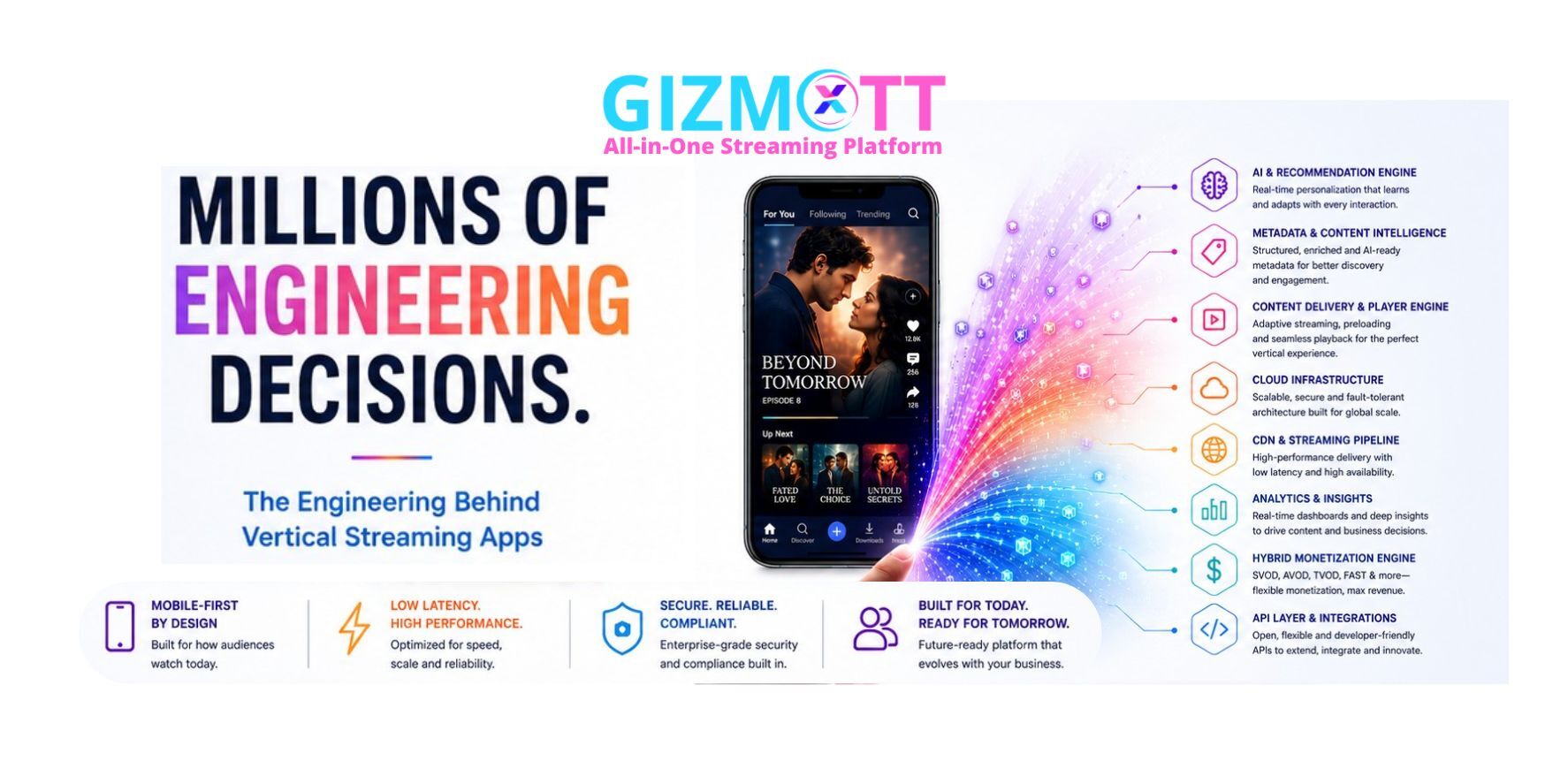
“OTT” — short for over-the-top — is industry shorthand for streaming services that run independent of cable and telecom infrastructure. Netflix is OTT. Disney+ is OTT. So is the Tucker Carlson Network. For a podcaster, launching one means a few specific things change. Your apps are yours. A real OTT platform ships on iOS, Android, Apple TV, Roku, Fire TV, Samsung, LG, and Android TV — your show ends up on the same screens as Netflix, with your branding, not someone else’s. For interview shows and long-form podcasts, the living room TV is a use case YouTube has only partially solved. You set the monetization model. Memberships. Ad-supported. Pay-per-view for one-off events or specials. Tokenized access for a super-fan tier. You decide what’s free, what’s paid, and what’s in between — and you collect the revenue directly. You own the data. Email, viewing history, drop-off points, what converts a free viewer into a paid one. That data is what makes a media business actually compound. On someone else’s platform, you can rent the audience. On your own, you build a relationship. YouTube becomes the trailer. The smart play isn’t to leave YouTube. It’s to use YouTube and Instagram and TikTok the way they were always best used — as the top of the funnel. Full episodes, premium drops, archives, and your most loyal audience live somewhere you control.The shift isn’t from social media to OTT. It’s from relying on social media to using social media.
Who Should Actually Consider This
This isn’t a move for every podcaster. If you have 5,000 monthly downloads and you’re still building your audience, your time is better spent making episodes and growing on the platforms where discovery happens. But if you’re at scale — meaningful download numbers, an engaged audience, a brand people recognize, and ideally a community willing to pay for more than they’re getting for free — the calculus changes. The break-even on operating your own platform is much lower than most podcasters assume, especially with modern OTT infrastructure that didn’t exist five years ago. The general signals that it’s time:- Your top fans keep asking for “more” — extended cuts, archives, behind-the-scenes, ad-free versions.
- You’ve outgrown what Patreon or platform-native memberships can offer.
- You want to run events, drops, or exclusive series that need their own paywalls.
- You’re losing meaningful revenue to platform cuts every month.
- You want your show on connected TVs — Roku, Fire TV, Apple TV — and not just inside the YouTube app.
The Real Question Isn’t Whether — It’s When
Tucker Carlson launched eight months after leaving Fox. Steven Bartlett built Flight Studio while Diary of a CEO was still growing on YouTube. The pattern across both is that they didn’t wait for the perfect moment. They moved while they had momentum, audience attention, and a clear sense of what their fans would pay for. The infrastructure side — the apps, the billing, the streaming, the device coverage — used to be the hard part. It isn’t anymore. What’s hard is the editorial decision: deciding that your show is a business, not just content, and that the business deserves to live somewhere you actually own. For podcasters at scale, that decision is the one worth making.Thinking about your own platform? Gizmott is built specifically for creators making the move from social platforms to owned streaming. Apps on every major device, every monetization model, full ownership of your audience data — out of the box. See how it works →