
1. Being Where Your Audience Is Still Matters
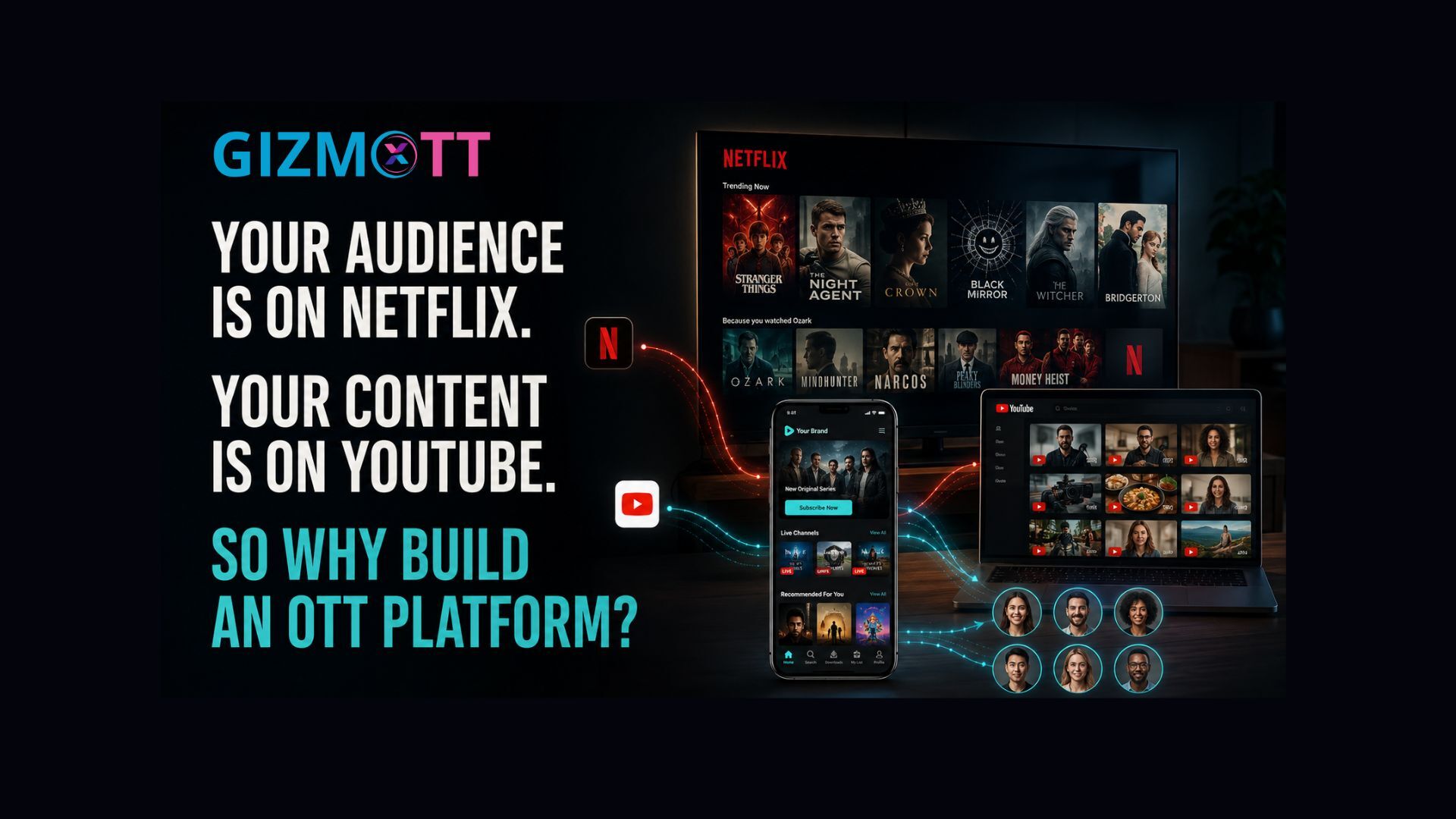
The argument for an owned OTT platform should not begin with abandoning Netflix, YouTube or social media. These channels remain powerful because audiences already use them. YouTube is one of the world’s largest video discovery engines. It allows content owners to reach viewers without asking them to download a new application or pay for a subscription. Short clips can circulate through search, recommendations, embeds and social sharing. For emerging creators and media brands, it can provide immediate visibility. Netflix and other major streaming platforms offer a different advantage: scale, prestige and access to audiences that are willing to spend time with professionally produced entertainment. Social platforms, meanwhile, have become essential for generating attention. A memorable scene, interview extract, sports highlight or microdrama cliffhanger can introduce millions of people to content they may never have actively searched for. These platforms are valuable distribution channels. The problem begins when a media company treats them as the entire business. Third-party platforms determine how content is presented, which videos are recommended and how advertising revenue is divided. They can change their algorithms, eligibility criteria and monetization policies. They can place competing content directly beside yours. Most importantly, they maintain the primary relationship with the viewer. A content owner may receive views without gaining meaningful knowledge about the people behind those views. Who are the most loyal viewers? Which programmes encourage repeat visits? What makes someone stop watching? Which audience segment might pay for an ad-free experience? Which viewers are interested in live events, merchandise, memberships or premium access? An owned video streaming platform gives media businesses a clearer way to answer these questions. This does not mean every YouTube subscriber will download a standalone OTT app. Nor should that be the immediate objective. The goal is to identify the most engaged section of the audience and give those viewers a better reason to enter an owned environment. Companies such as Gizmott, which enable broadcasters and content owners to launch white-label OTT platforms across connected TV, mobile and web, are helping make this transition more accessible. Instead of replacing existing distribution channels, the technology can help media brands connect those channels to an ecosystem they control. The winning strategy is not “YouTube or OTT.” It is using YouTube for reach and an owned OTT platform for relationships, retention and long-term value.2. An OTT Platform Is Valuable Only When It Offers a Reason to Return
Launching an OTT app is no longer the hardest part of entering the streaming market. The more difficult question is why someone should use it. Audiences already have Netflix, YouTube, Prime Video and several social media apps competing for their time. A new streaming platform cannot succeed simply because a media company has placed its existing content inside a branded interface. An app is infrastructure. The audience habit is the actual product. A strong OTT platform needs a clear value proposition that cannot be replicated by occasionally publishing videos on YouTube. That value might come from exclusive programming, regional content, a specialised interest, deeper access to creators or a community built around a shared identity. For a broadcaster, it could mean providing local news, live television, catch-up content and regional-language programming in one destination. For a sports organisation, it could combine live matches, highlights, athlete stories, statistics and archived games. For a creator network, it might offer early releases, extended episodes, behind-the-scenes content and direct interaction with fans. The strongest platforms often combine several layers of value:- Free short-form content that attracts new viewers
- Premium shows or films that encourage subscriptions
- Live programming that creates urgency
- Personalised recommendations that improve discovery
- Community features that build loyalty
- Archives that give older content new commercial value
3. Ownership Changes the Economics of Digital Media
The most important reason to build an OTT platform may not be content distribution. It may be control over the business model. On third-party platforms, monetization is usually limited by the rules of the platform. Advertising revenue is shared. Viewer data is restricted. Subscription relationships belong to someone else. Even when a media company generates significant reach, it may have limited ability to convert that attention into predictable revenue. An owned OTT platform creates more flexibility. A media company can choose a subscription video-on-demand model, commonly known as SVOD, where viewers pay a recurring fee. It can use advertising-supported video on demand, or AVOD, to keep content free while monetizing attention. It can charge for individual events through TVOD, introduce FAST channels, offer memberships or combine several models in a hybrid OTT strategy. For example, a platform might provide a free ad-supported library while placing premium originals behind a subscription. Live events could be sold separately. Loyal viewers might receive an ad-free plan, early access or exclusive community benefits. The objective is not simply to collect more revenue from each video. It is to increase the lifetime value of the audience relationship. Ownership also improves strategic visibility. First-party audience data can help a media company understand content completion rates, subscription behaviour, churn patterns, device preferences and geographic demand. These insights can influence acquisition, programming, advertising and production decisions. A broadcaster may discover that its younger viewers primarily enter through short-form clips but remain for live content. A creator-led platform might learn that audiences subscribe for one personality but later explore related programmes. A regional media company may identify strong demand from diaspora audiences in markets it had not previously prioritised. This intelligence is difficult to build when audience behaviour is fragmented across external services. Through its OTT technology, analytics and monetization capabilities, Gizmott can help media businesses establish a more direct connection with their viewers. The platform can support multiple revenue models while allowing content owners to maintain their own identity rather than disappearing inside a larger marketplace. There is also a significant advertising advantage. An owned environment can give publishers greater control over ad inventory, formats, frequency and audience segmentation. Server-side ad insertion can create smoother viewing experiences, while contextual and first-party signals can support more relevant advertising. This does not mean every media company should immediately place all its content behind a subscription. Paywalls can reduce discovery if they are introduced before sufficient audience loyalty exists. The more effective approach is often progressive ownership. Use open platforms to acquire viewers. Move engaged audiences toward an owned service. Provide enough free value to encourage adoption. Introduce premium options when the relationship is strong enough to support them. Reach creates awareness. Ownership creates enterprise value.4. The Best OTT Strategy Turns Every Platform Into an Entry Point
Many media companies make the mistake of treating their OTT platform as an isolated destination. They launch an app, upload a catalogue and expect audiences to arrive. Modern content discovery rarely works that way. Viewers move continuously between search engines, social feeds, connected televisions, messaging apps, websites and streaming platforms. A single viewing journey may involve several of these environments. Someone might discover a 30-second scene on Instagram, watch a longer clip on YouTube, search for the actors on Google and then open the official OTT app to view the full series. Another person might see a sports highlight shared in a group chat before subscribing to watch the next match live. The role of an OTT platform is not to interrupt this behaviour. It is to become the most valuable destination within it. That requires designing content as a connected funnel rather than a collection of separate uploads. Short-form video can attract attention. YouTube can provide context and searchable content. Email, push notifications and social communities can encourage viewers to return. The owned streaming platform can then deliver the full experience, whether that means live programming, exclusive episodes, premium archives or personalised viewing journeys. This model is especially relevant as short-form and long-form streaming converge. A microdrama clip can function as entertainment and promotion simultaneously. A character moment can circulate independently before leading viewers into a longer storyline. AI-generated recaps can help people enter a series without beginning at Episode 1. Personalised recommendations can connect viewers to scenes, themes and creators rather than merely suggesting the next chronological episode. The content library begins to operate like a network of entry points. For technology providers such as Gizmott, this creates an opportunity to help content owners organise, distribute and personalise video across devices and formats. A modern OTT platform must do more than play content. It needs intelligent content management, cross-platform distribution, audience analytics, scalable monetization and recommendations that make large catalogues easier to navigate. The platform should also be designed around the audience’s actual behaviour. If viewers primarily discover content through mobile devices, the service should make vertical and short-form video easy to consume. If the audience values live programming, the platform needs reliable streaming and timely notifications. If viewers regularly use smart televisions, connected TV applications should not be treated as an afterthought. Every external platform can support the owned ecosystem:- Social media generates discovery.
- YouTube improves reach and search visibility.
- Partnerships introduce the brand to new audiences.
- Connected TV supports lean-back viewing.
- The OTT platform consolidates engagement, data and monetization.