
A New Category Is Taking Shape
The commercial momentum behind the format is becoming difficult to ignore. Omdia estimates that global microdrama revenues reached $11 billion in 2025 and could grow to $14 billion by the end of 2026. Its research also found that US audiences spend more time watching microdrama apps on mobile devices than watching Netflix, Disney+ or Amazon Prime Video on mobile. These figures indicate a meaningful shift in viewing behavior, although the market remains uneven across regions and business models. The opportunity is particularly interesting because vertical drama sits between several established categories without fitting neatly into any one of them. It borrows the serialized storytelling of television, the immediacy of social video, the mobile-first experience of creator platforms, and the transactional possibilities of digital entertainment. This combination creates room for new businesses to emerge while giving established production companies and media groups a reason to reconsider how they package and distribute their intellectual property. The United States is becoming an important market beyond China, where the format first achieved substantial scale. Investment in new productions and platforms suggests that vertical storytelling is moving beyond its early association with mobile entertainment apps. Established entertainment businesses, independent producers, brands, and digital-first studios are all finding reasons to explore the format. Yet market growth should not be mistaken for guaranteed commercial success. A growing audience creates room for more businesses, but it also attracts competition. As the number of series and apps increases, the ability to produce compelling stories will remain important, while the ability to acquire, retain, and monetize audiences will become an increasingly significant differentiator. The next phase of the market will depend not simply on how much vertical content gets made, but on which businesses develop a repeatable model around it.The Real Question Is Who Owns the Audience
For production companies, vertical drama presents an opportunity that extends beyond taking on another format of commissioned work. A producer can create a series for a brand, a social platform, or an existing microdrama service and earn revenue from that production. That is a legitimate business in its own right. However, the economics and strategic possibilities change when a company begins to consider whether it should also operate the destination through which its content reaches viewers. Distribution has always influenced the commercial value of entertainment. A production may be successful creatively, but its financial potential is shaped by the terms under which it is licensed, the audiences it reaches, and the share of revenue the producer retains. Digital distribution introduces another dimension: the relationship with the viewer can become an asset in its own right. An owned platform may allow a business to understand viewing patterns, develop direct relationships with subscribers, test different monetization models, and build value across a growing library of content. That does not mean every production house should launch its own app. Building a destination requires investment, ongoing operations, marketing, and a clear reason for audiences to return. A company with one short series and no plan for future releases may be better served by distributing through established platforms. A producer with a substantial catalogue, recurring releases, an existing audience, or a strategy to develop original intellectual property may have a different calculation to make. Before committing to a distribution strategy, business owners should consider four questions:- Who owns the audience relationship? Is the business building a direct connection with viewers, or relying entirely on a third-party platform?
- What happens after the final episode? Is there another series, a growing library, or a compelling reason for viewers to return?
- How will the content generate revenue? Will the model rely on subscriptions, paid episode access, advertising, or a combination of approaches?
- What long-term value is being created? Is the business building a catalogue, a recognizable brand, audience insights, or intellectual property that can support future growth?
From a Successful Series to a Repeatable Business
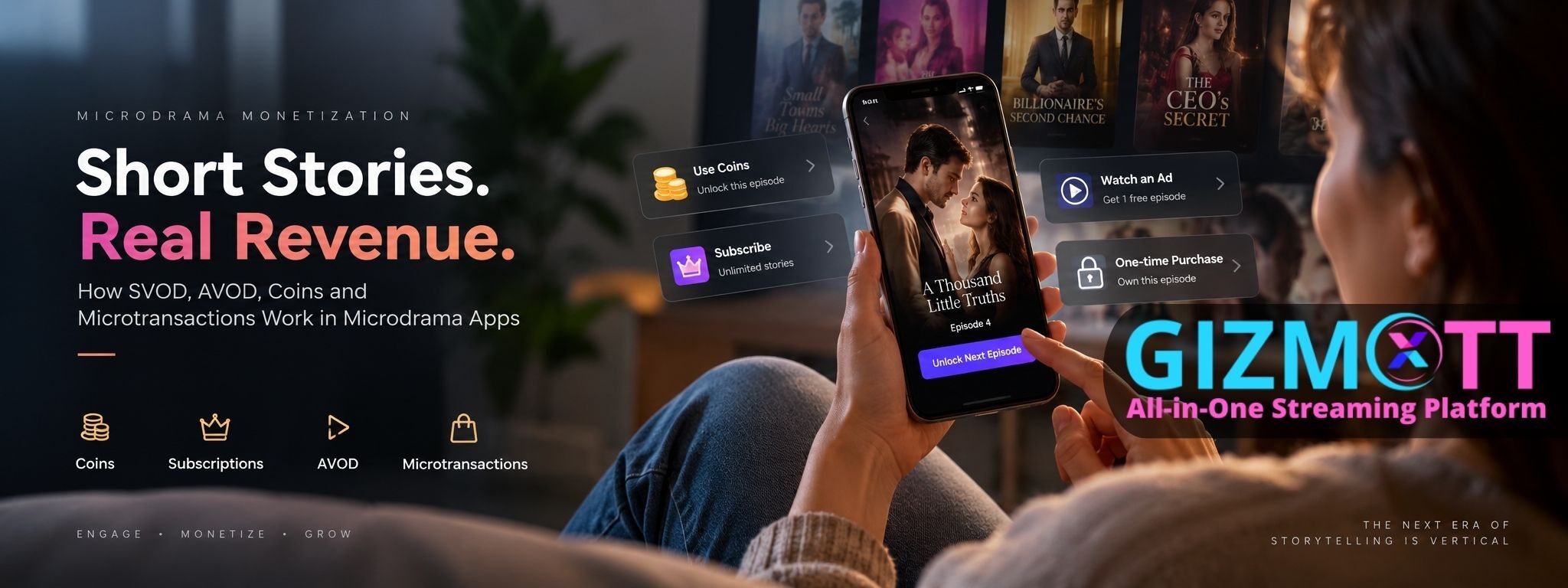
A hit series can create attention, but a sustainable entertainment business needs a plan for what comes after the final episode. The value of a library depends not only on the quality of its individual titles, but also on how easily viewers can discover them, how effectively the business encourages repeat viewing, and whether the catalogue gives audiences a reason to return. This requires a different way of thinking about content planning. Producers may need to consider how a catalogue is organized by genre, audience, language, and viewing preference. Release schedules can influence how often viewers return, while the relationship between free and paid episodes can shape the path from initial discovery to purchase. Businesses must also decide whether their audiences are best served by a single flagship series, a continuously expanding library, or a combination of original productions and licensed content. The financial model deserves equal attention. Some vertical drama services offer free introductory episodes followed by paid access, subscriptions, or other transactional mechanisms. Advertising can also play a role, depending on the audience, viewing experience, and scale of the service. Omdia’s earlier analysis found that more than 60% of global microdrama revenue was expected to come from subscription or transactional payments, often following a free introductory model. Omdia’s market analysis provides a useful indication of how central paid viewing has been to the category’s economics. These approaches are not interchangeable, and the most suitable model will depend on the content and audience. A highly serialized drama may lend itself to episode unlocks or season access, while a broader catalogue may support subscriptions. Advertising can create a lower barrier to entry, but its effectiveness depends on audience scale, engagement, and the ability to deliver and measure campaigns. A business may also combine revenue streams rather than rely on a single model. What turns a vertical series into a business is the ability to connect these decisions:- Content continuity: A consistent release strategy and a library that gives viewers a reason to return.
- Audience retention: An experience that encourages viewers to continue watching and discover other series.
- Monetization fit: A revenue model that matches audience behavior, content type, and willingness to pay.
- Performance measurement: Data that helps identify where viewers drop off, which episodes drive engagement, and what converts interest into revenue.
- Operational efficiency: The ability to publish, manage, and distribute episodes without creating unnecessary overhead as the catalogue grows.
Technology Is Part of the Business Model
It is tempting to view technology as the final step, something to arrange after the content has been produced and the business strategy has been settled. In practice, technology choices can influence the strategy itself. A platform that is difficult to update may slow down release schedules. Weak discovery can leave valuable content buried in a growing catalogue. Limited payment flexibility can restrict monetization options, while inadequate analytics can make it difficult to understand what is working. For a company considering its own branded vertical drama platform, the essential capabilities typically include:- Vertical-first viewing: A mobile experience designed around portrait video and short episodic storytelling.
- Content management: Efficient publishing, episode organization, metadata management, and release scheduling.
- Discovery and recommendations: Helping viewers find relevant series and continue exploring the catalogue.
- Flexible monetization: Support for subscriptions, advertising, transactional payments, or suitable combinations.
- Audience analytics: Visibility into viewing behavior, completion, retention, and revenue performance.
- Scalable delivery: Infrastructure that can support audience growth, expanding libraries, and additional platforms as the business evolves.