
What Is Subscription Fatigue in OTT Platforms?
Subscription fatigue refers to the growing reluctance of users to pay for multiple streaming services. As the number of OTT platforms increases, so does the financial and mental burden on consumers. Users today often subscribe to:- entertainment platforms
- sports streaming services
- regional content apps
- niche creator platforms
- music and podcast services
- cancel services more frequently
- rotate subscriptions month-to-month
- prioritize free or lower-cost alternatives
- engage less with platforms they pay for
- subscriber growth
- retention rates
- lifetime customer value
- revenue predictability
Why Traditional SVOD Models Are Losing Momentum
Subscription-based OTT platforms were once the gold standard. They offered predictable recurring revenue and encouraged long-term customer relationships. However, several factors are weakening the pure SVOD model:1. Rising Competition
There are now hundreds of streaming platforms competing for attention. Users are no longer loyal to a single service.2. Increasing Costs
Monthly subscriptions across multiple platforms add up quickly, leading users to cut back.3. Content Saturation
More content does not necessarily mean better engagement. Users struggle to find relevant content.4. Low Engagement
Subscribers who don’t actively use a platform are more likely to churn.5. Lack of Flexibility
SVOD requires upfront commitment, which many users are no longer willing to make. This does not mean subscriptions are disappearing—but it does mean they need to evolve.What Is Hybrid Monetization in OTT?
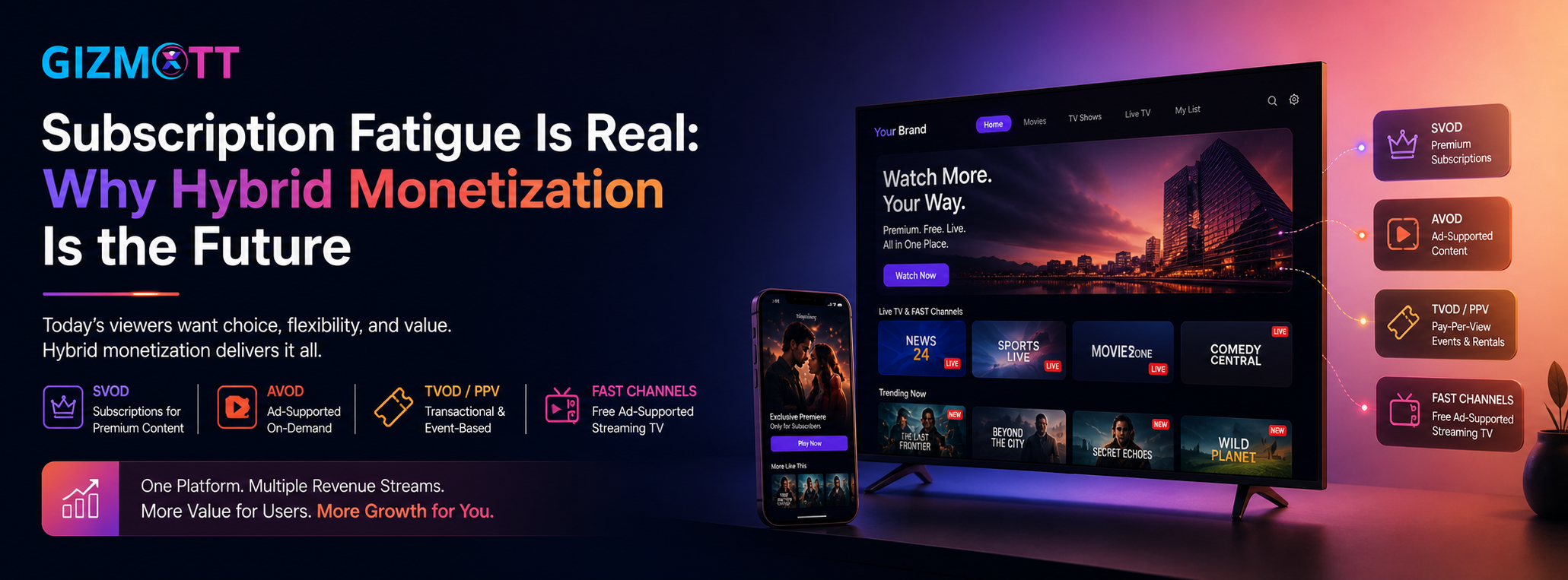
Hybrid monetization is a strategy that combines multiple revenue models within a single streaming platform. Instead of depending on one revenue stream, platforms create a flexible ecosystem that adapts to different user preferences. A typical hybrid OTT monetization model includes:- SVOD (Subscription Video on Demand) for premium access
- AVOD (Ad-Supported Video on Demand) for free content
- TVOD (Transactional Video on Demand) for pay-per-view content
- PPV (Pay-Per-View) for exclusive events
- FAST Channels (Free Ad-Supported Streaming TV) for linear viewing
Why Hybrid Monetization Is the Future of Streaming Platforms
Hybrid monetization is not just a trend—it is becoming the default strategy for modern OTT platforms. Here’s why.1. Expands Audience Reach
Not every user wants to subscribe. By offering AVOD and FAST channels, platforms can attract a larger audience base, including users who prefer free content. This increases:- traffic
- engagement
- brand visibility
2. Reduces Churn
Users who are not ready to pay can still remain within the ecosystem through free content options. Instead of leaving entirely, they stay engaged. This significantly reduces churn.3. Increases Revenue Opportunities
Hybrid models create multiple revenue streams:- recurring subscriptions
- advertising revenue
- one-time purchases
- premium content unlocks
4. Supports Different User Behaviors
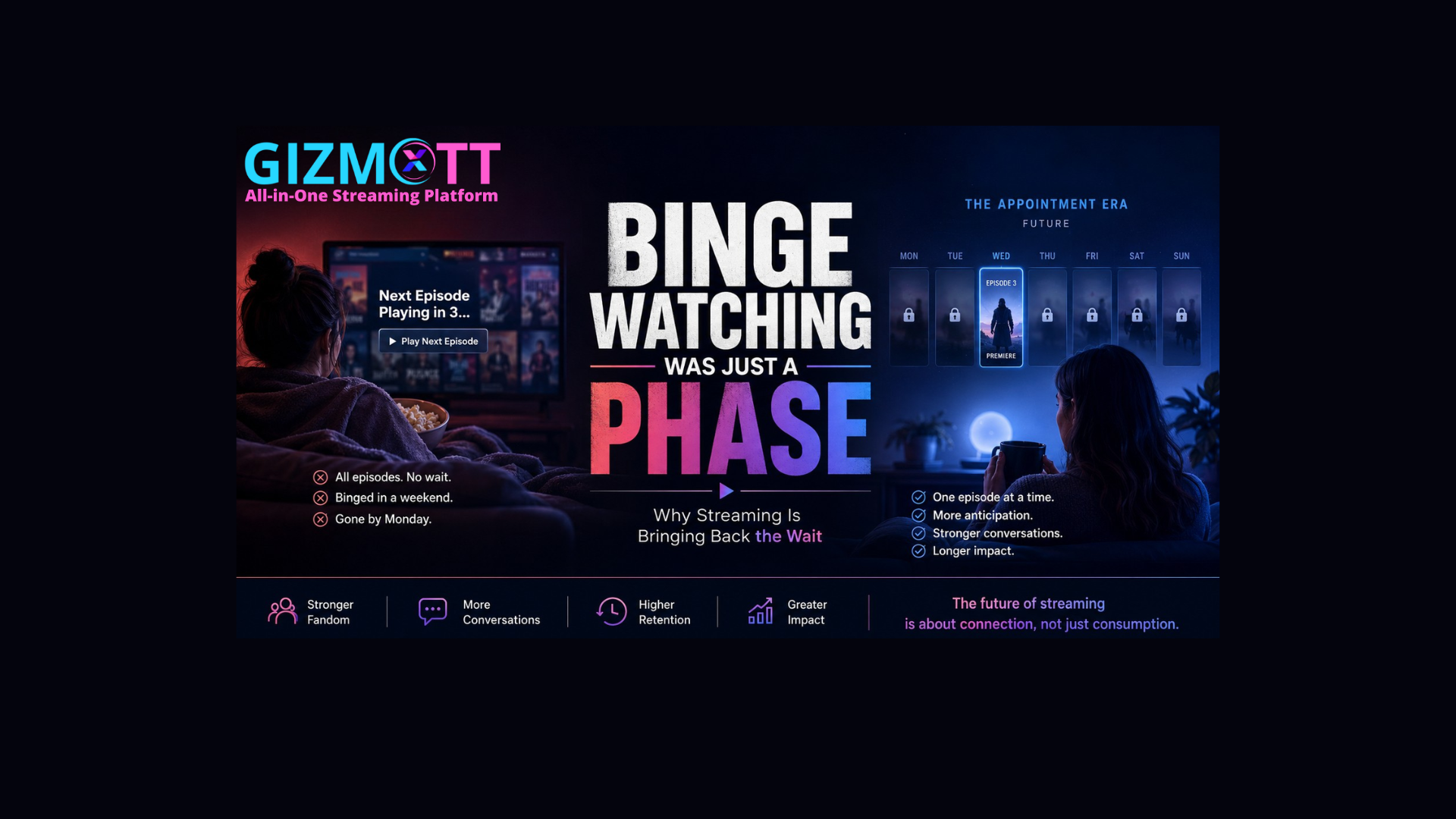
Some users prefer:- binge watching (SVOD)
- casual viewing (FAST channels)
- event-based purchases (PPV)
5. Enables Better Content Strategy
Platforms can segment content:- free content for discovery
- premium content for monetization
- exclusive content for upselling
FAST Channels and AVOD: The Rise of Free Streaming
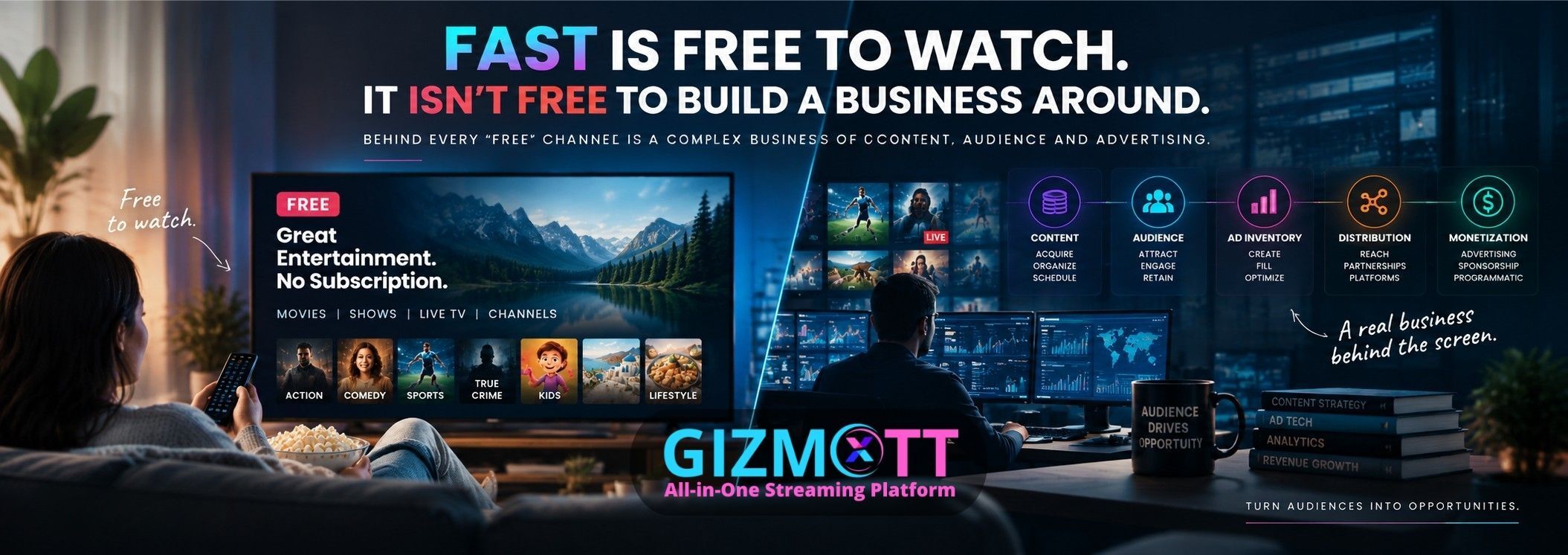
One of the biggest drivers of hybrid monetization is the growth of FAST channels and AVOD platforms. Free streaming has become increasingly attractive because it removes the barrier to entry. Users can start watching immediately without committing to a subscription. For platforms, this creates:- higher user acquisition
- better content discovery
- increased ad inventory
- scalable monetization
- linear programming
- curated content streams
- continuous engagement
The Role of AI in Hybrid OTT Monetization
Artificial Intelligence is a key enabler of hybrid monetization strategies. AI helps platforms:- personalize content recommendations
- optimize ad targeting
- segment audiences
- predict churn
- improve content discovery
- automate monetization workflows
Creator Economy and Flexible Monetization Models
The rise of the creator economy has further accelerated the shift toward hybrid monetization. Creators are no longer dependent on platforms like YouTube for revenue. They are launching their own OTT platforms with:- subscription communities
- pay-per-content access
- ad-supported free content
- exclusive premium tiers
- monetize different audience segments
- experiment with pricing models
- build direct relationships with viewers
- scale their business independently
GIZMOTT Enables Hybrid Monetization at Scale
As streaming evolves, platforms need infrastructure that supports flexibility. This is where GIZMOTT stands out. GIZMOTT enables businesses to launch fully branded white-label OTT platforms with built-in support for hybrid monetization. With GIZMOTT, you can:- launch across Web, iOS, Android, Android TV, Apple TV, Roku, and Fire TV
- integrate SVOD, AVOD, TVOD, and PPV models
- build and manage FAST channels
- stream live events and VOD content
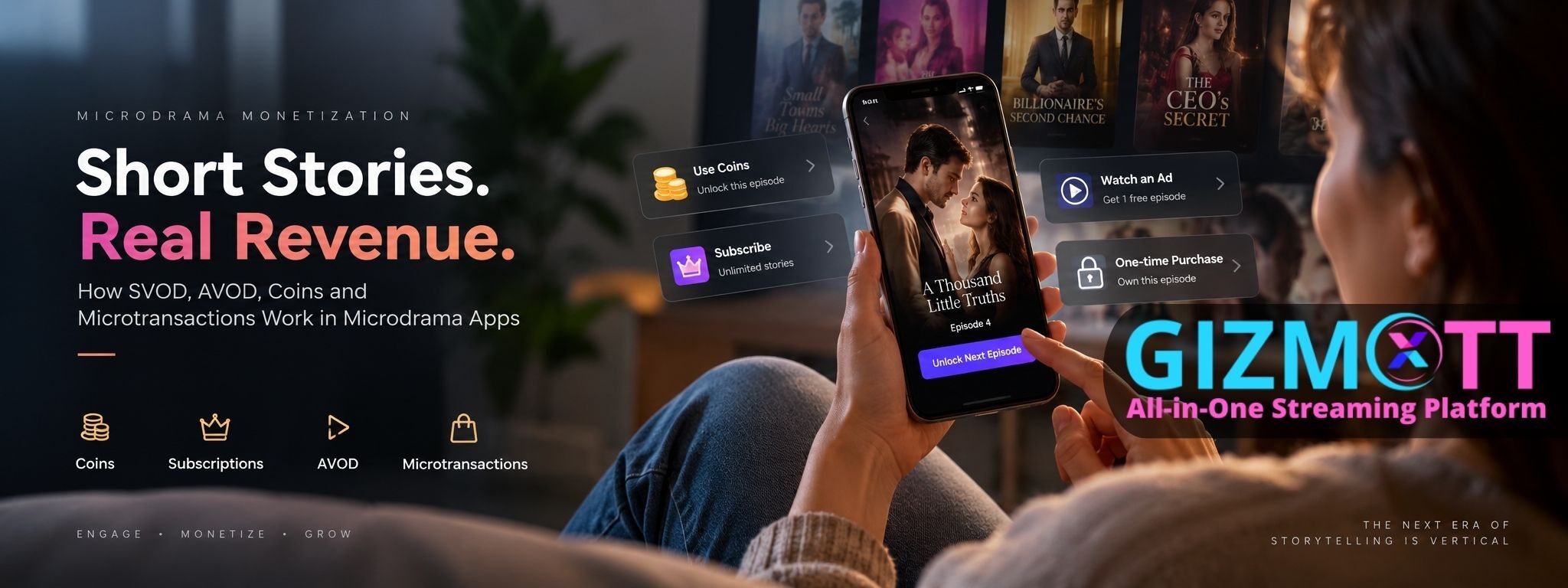
- support vertical video and microdrama platforms
- access AI-powered recommendations and analytics
Building a Future-Ready OTT Platform
The OTT industry is no longer defined by a single monetization model. Platforms that rely only on subscriptions are increasingly vulnerable to churn and competition. To build a future-ready streaming platform, businesses must:- diversify revenue streams
- adopt hybrid monetization strategies
- leverage AI for personalization and optimization
- focus on user engagement and retention
- support multiple content formats, including vertical video and microdramas
The Future of OTT Monetization Is Flexible
Subscription fatigue is not a temporary trend—it is a structural shift in how audiences interact with streaming platforms. Users want:- flexibility
- choice
- value
- accessibility