
Microdrama Monetization Starts with Viewer Intent
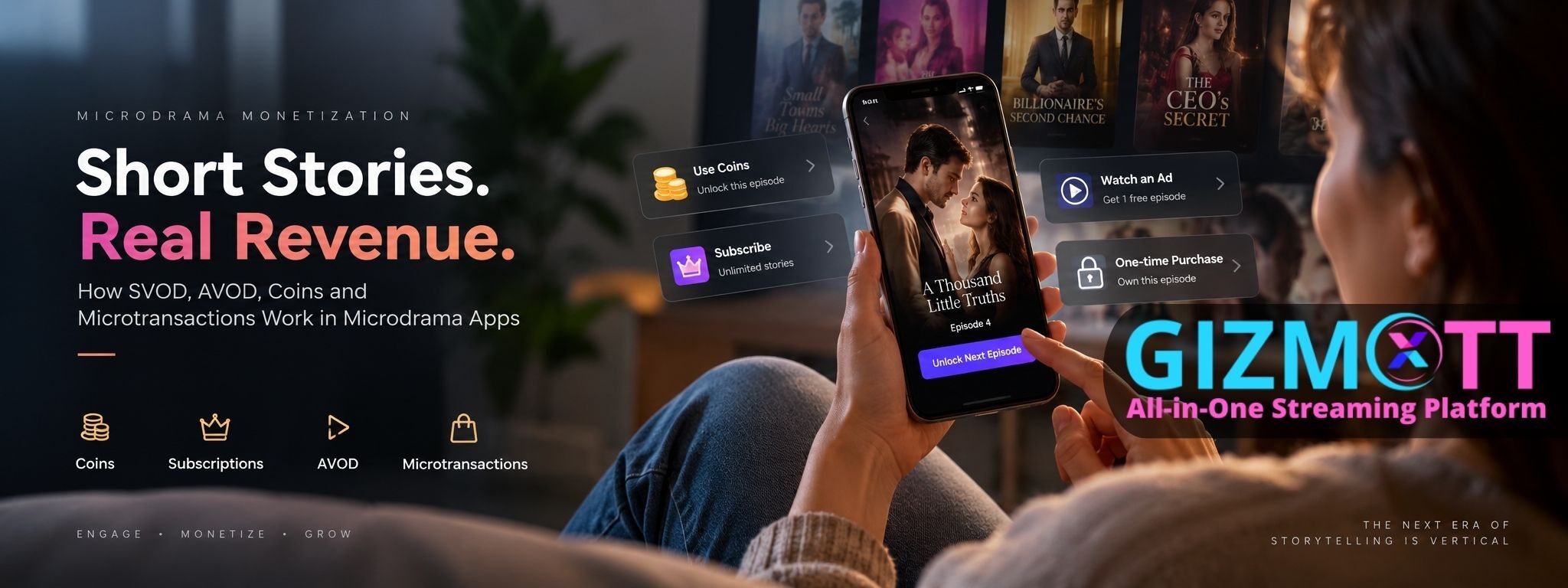
The biggest mistake a platform can make is assuming every viewer should be monetized in exactly the same way. They shouldn’t. Consider four viewers watching the same series. One watches an episode occasionally and has no intention of paying. Another is curious but will tolerate an advertisement to continue. A third becomes invested in the story and is willing to purchase coins to unlock several episodes. A fourth watches multiple series every week and would rather pay a subscription than repeatedly purchase individual access. They are all valuable. They simply have different levels of intent. This is why the strongest microdrama monetization strategy is not a single revenue model. It is a layered monetization system. The platform should be able to move with the viewer. Free viewing → Engagement → Rewarded access → Transaction → Subscription That is the monetization journey worth designing.1. Coins Turn Story Engagement Into a Transaction
Coins have become closely associated with microdrama apps because they fit naturally with serialized storytelling. Instead of purchasing an entire season, viewers can purchase virtual credits and use them to unlock individual episodes. The psychology is straightforward. A subscription asks: “Do you want to pay for this service?” A coin purchase asks: “Do you want to see what happens next?” That is a very different proposition. The viewer has already invested time and emotion into the story. A relatively small transaction can remove the barrier between the viewer and the next episode. For platforms, coins also provide flexibility. A business can create different coin packages, introductory offers, bonus credits or promotional campaigns. It can experiment with the relationship between content access and transaction value without redesigning the entire subscription structure. But there is an important lesson here: Coins should support the story—not interrupt it. If every viewing decision feels like a payment request, the experience becomes transactional rather than entertaining. The objective is to make monetization feel like a natural part of the viewing journey.2. Subscriptions Create a Different Kind of Value
Subscriptions remain important because they solve a different problem. Coins work particularly well when a viewer wants specific content. Subscriptions work when the viewer wants ongoing access. A frequent viewer may not want to think about how many coins remain in their wallet every time they reach a paywall. An all-access or premium subscription can remove that friction. A microdrama platform might therefore offer:- Premium access
- Ad-free viewing
- Exclusive series
- Early access to new episodes
- Unlimited viewing
- Subscription bundles with coins or credits
3. AVOD Expands the Monetizable Audience
Advertising solves a completely different problem. Not every viewer will pay. That doesn’t mean they have no economic value. AVOD allows platforms to monetize viewers through advertising while keeping content accessible without a direct payment. For microdrama, this can be particularly interesting because the format naturally encourages frequent sessions. A viewer may open the app several times throughout the day. Every session creates another opportunity: Watch → Engage → See an ad → Continue The platform doesn’t have to convert every viewer into a subscriber. It can monetize the scale of the audience itself. This becomes especially relevant for US and European streaming businesses where advertising has become an increasingly important component of the broader streaming economy. But there is a difference between simply inserting advertisements and building an effective advertising business. The platform needs the infrastructure to manage inventory, targeting, frequency, measurement and revenue. That is where OTT and CTV ad technology becomes part of the microdrama conversation.4. Rewarded Advertising Can Bridge Free and Paid Viewing
Rewarded advertising may be one of the most interesting monetization mechanisms for microdrama. Instead of telling the viewer: “Pay to continue.” the platform can offer: “Watch an ad and continue.” That creates a three-way value exchange. Viewer: receives access. Advertiser: receives attention. Platform: generates revenue. It can also reduce friction for users who are interested in the content but are not ready to make a purchase. More importantly, rewarded advertising gives the platform another option at the paywall. The viewer can pay with money or, in a sense, pay with attention. That makes rewarded video particularly useful as part of a broader hybrid monetization strategy.5. Microtransactions Are About More Than Episode Unlocks
The term “microtransaction” is often used interchangeably with coins, but there is a broader opportunity. A microdrama platform can use small transactions for:- Coin packages
- Individual episode access
- Premium episodes
- Special content
- Bonus access
- Limited-time offers
- Exclusive releases
The Real Opportunity: Hybrid Monetization
This is where I believe the microdrama business becomes particularly interesting. The future is unlikely to belong to coins versus subscriptions versus advertising. It belongs to platforms that can use all three intelligently. Think of the viewer journey this way:| Viewer behavior | Monetization opportunity |
| Discovering a series | Free viewing |
| Casual viewing | AVOD |
| Wants to continue | Rewarded video |
| Highly invested in one story | Coins |
| Watching multiple series | Subscription |
| Long-term viewer | Hybrid offers |
Monetization Should Follow the Content
Microdrama also changes the relationship between storytelling and monetization. In traditional television, an episode might be 45 minutes. In traditional streaming, a viewer may watch an entire season without encountering a payment decision after subscribing. Microdrama can work differently.- Episodes are shorter.
- Stories move faster.
- Cliffhangers arrive frequently.
- Viewers make more viewing decisions.
- Where does the story become compelling?
- Where does the viewer become emotionally invested?
- Where does a viewer naturally want to continue?
The Technology Behind Microdrama Monetization
This is the part that is often underestimated. A successful microdrama business requires much more than a vertical video player. The platform needs to connect: Content + Users + Payments + Advertising + Entitlements + Analytics Consider a simple coin transaction. A viewer purchases coins. The platform has to process the payment, update the wallet, record the transaction, verify the user’s balance and determine what content that user can now access. The same principle applies to subscriptions. The system needs to understand:- Who subscribed
- What plan they purchased
- What they can access
- When their entitlement expires
- Which devices they can use
- What happens if the payment fails
- Which series creates the most paying viewers?
- Which episodes drive conversions?
- Where do viewers abandon the story?
- Which monetization method produces the strongest retention?
The Metrics That Actually Matter
Downloads can make a microdrama app look successful. They don’t necessarily make it profitable. Operators should be looking at the relationship between engagement and monetization. Important metrics include:- Viewer retention
- Episode completion
- Paywall conversion
- Coin purchase rate
- Subscription conversion
- Rewarded-ad engagement
- Average revenue per user
- Average revenue per paying user
- Customer lifetime value
- Churn
- Revenue by content title