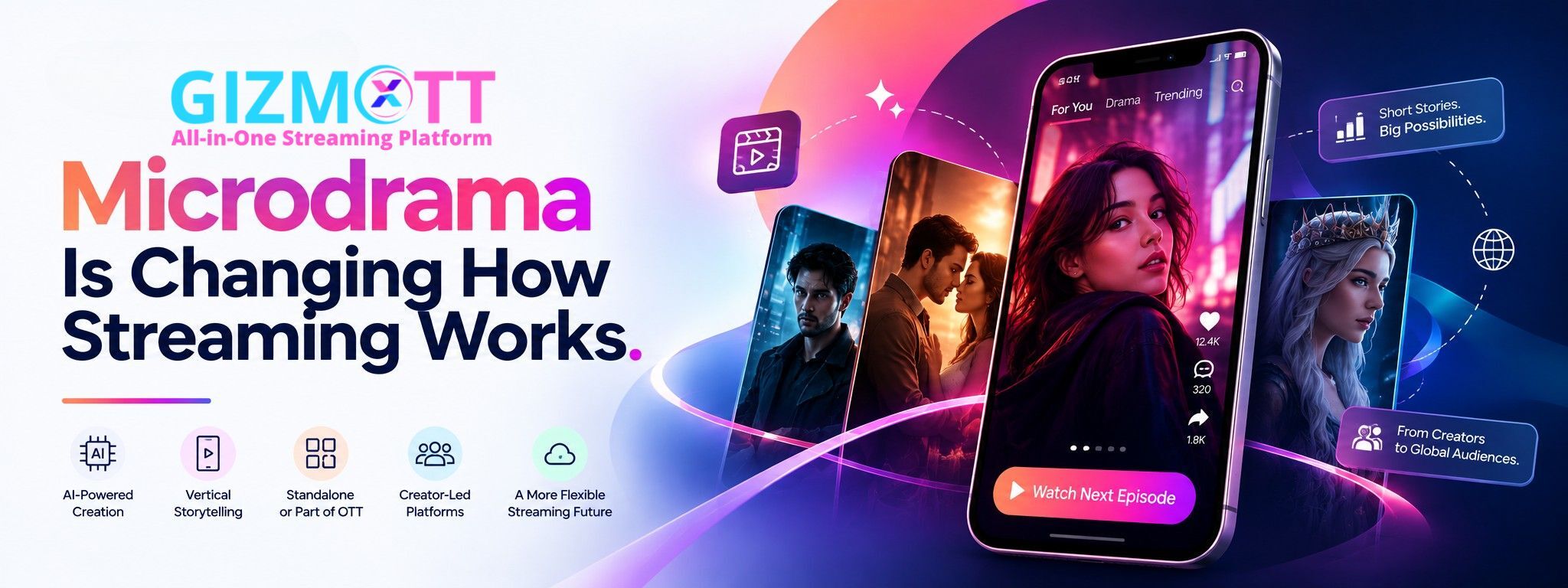

Streaming Was Built Around Access. Microdrama Is Built Around Momentum.
Traditional OTT platforms are fundamentally library businesses. A subscriber pays a monthly fee and receives access to a large collection of movies, series, documentaries, live channels and other programming. The platform then has to continuously justify that subscription through content depth, new releases, recommendations and retention. Microdrama operates differently. The story itself is designed to create a chain of micro-decisions:- Watch the opening episode.
- Watch the next one.
- Reach the cliffhanger.
- Want the resolution.
- Unlock the next episode.
- Continue watching.
The Unit of Value Is Changing
The traditional streaming question is: “Will this subscriber pay for another month?” The microdrama question can be: “Will this viewer pay to see what happens next?” That sounds like a small difference. From a product and monetization perspective, it is not. Microdrama has borrowed several principles from mobile gaming. Virtual currencies, consumable purchases, rewarded advertising, short subscription periods and episode-level unlocks can all coexist within the same experience. RevenueCat’s 2026 analysis found in-app purchases on 93% of short-drama listings in its sample, subscriptions on 86% and advertising on 67%. More than half displayed all three monetization mechanisms. That tells us something important about the future of OTT monetization. The subscription does not have to disappear. It simply does not have to be the only transaction. For a streaming company, that opens the possibility of building a monetization stack rather than choosing a single business model. A platform could combine:- SVOD for predictable recurring revenue
- AVOD for free or lower-friction viewing
- Transactional unlocks for highly engaged viewers
- Virtual currencies or credits for episodic consumption
- Advertising and rewarded viewing to monetize non-paying audiences
- Brand integrations around specific franchises or stories
Microdrama Makes the Wallet Part of the Product
There is another subtle shift here. In conventional OTT, payment is often deliberately kept in the background. A viewer subscribes, enters the app and watches. The payment relationship happens periodically. Microdrama brings the transaction closer to the content. A viewer may have a wallet or token balance, use credits to unlock an episode and immediately continue watching. The payment mechanism becomes part of the product experience. That changes how companies think about monetization. Instead of asking only how many subscribers they have, they can start looking at episode-level conversion, unlock rates, wallet activity, completion rates and revenue per engaged viewer. In other words, microdrama creates a much tighter feedback loop between content performance and commercial performance. And that is particularly powerful for creators. A creator does not necessarily need to spend millions producing one large series and wait months to discover whether the audience cares. Short serialized content can create a faster cycle of produce → publish → measure → adapt. That makes content production increasingly resemble a technology product.AI Is Turning Content Production Into a More Iterative Business
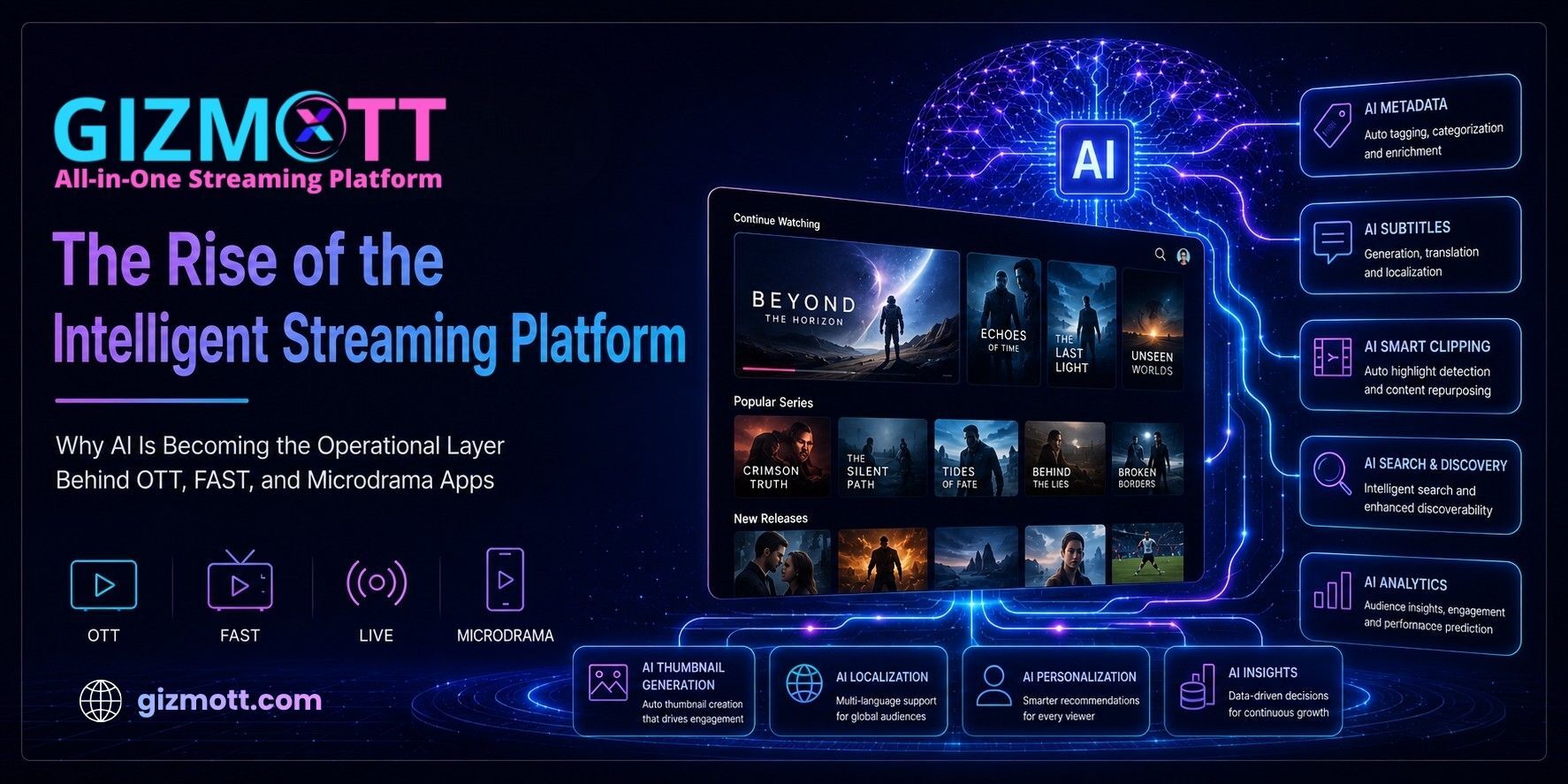
This is where AI becomes particularly interesting. The role of artificial intelligence in microdrama is not limited to generating an entire episode from a prompt. That is the most visible version of the technology, but arguably not the most important one. AI can increasingly participate across the production pipeline. It can assist with:- story ideation and episode concepts
- script development and dialogue variations
- character and scene development
- storyboarding and previsualization
- localization and multilingual versions
- subtitles and dubbing
- editing and clip creation
- promotional assets and trailers
- audience analysis and content recommendations
Vertical Video Is a Format. It Doesn’t Have to Be a Platform Strategy.
This may be one of the most important business lessons coming out of microdrama. Vertical video is often treated as synonymous with a standalone microdrama app. It does not have to be. A content company can launch a dedicated vertical-video streaming service built specifically around microdrama. But it can also introduce vertical storytelling as another layer inside an existing OTT platform. That flexibility is strategically important. Imagine an OTT service that already has movies, long-form series and live channels. It does not necessarily need to create an entirely separate business to experiment with microdrama. It could add a vertical content rail designed for mobile users. Alternatively, a creator with a strong microdrama concept could launch a standalone mobile-first app where the entire product experience — discovery, viewing, payments, recommendations and monetization — is designed around vertical storytelling. The content format can be vertical while the platform strategy remains flexible. That means companies can choose between two approaches: Standalone: Build a dedicated microdrama or vertical-video app with its own brand, audience and monetization strategy. Integrated: Add vertical microdrama into an existing OTT ecosystem alongside traditional horizontal content, live channels and VOD. The underlying technology does not necessarily need to be completely different. The difference is primarily in product experience, audience positioning and business strategy. Omdia itself describes vertical video and microdrama as a potential next step for streamers seeking more mobile engagement without replacing their long-form premium content. That is an important distinction. Microdrama does not have to compete with the existing OTT business. It can become another layer of it.The Real Opportunity May Be Audience Ownership
This is where the conversation gets bigger than microdrama. Creators today can build enormous audiences on YouTube, TikTok and Instagram. But audience reach and audience ownership are not the same thing. The platform controls the environment. The creator operates inside someone else’s ecosystem. Monetization, discovery and algorithmic distribution can change. Microdrama creates another opportunity: turning successful short-form IP into a direct-to-consumer streaming product. A creator could use social platforms for discovery, release selected content to generate awareness, and then move the deeper serialized experience into an owned OTT environment. That creates a funnel: Social discovery → free episodes → deeper engagement → app → subscription / unlock / advertising → first-party audience relationship. For content companies, that is strategically valuable. The objective is no longer simply to accumulate views. It is to convert attention into an owned relationship.This Is Where OTT Infrastructure Becomes Critical
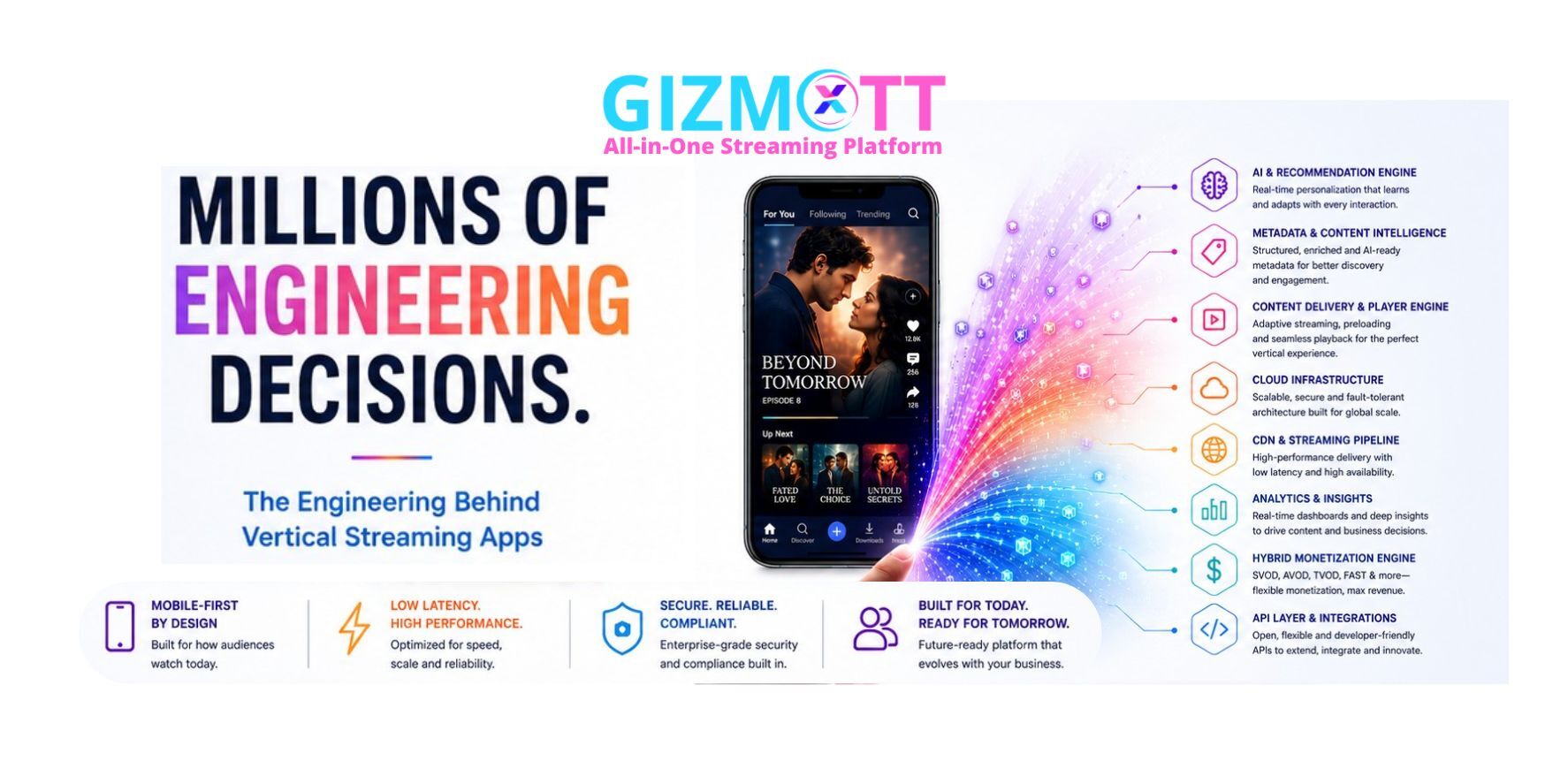
Producing microdrama is only one part of the problem. Once a company decides to commercialize it, the technology underneath becomes important very quickly. A serious microdrama OTT platform needs to handle vertical video delivery, content management, episode sequencing, user accounts, payments, wallets or credits, monetization, analytics, recommendations and multi-device distribution. And it needs to do this without forcing the business to choose between traditional OTT and vertical video. This is one reason the infrastructure layer matters. At GIZMOTT, the approach is to give creators and content companies the flexibility to build microdrama into their OTT strategy rather than treating it as an isolated technology stack. A company can launch a dedicated vertical-video or microdrama application, or introduce vertical content into an existing OTT platform. The same broader OTT infrastructure can support content management, apps, monetization, analytics and audience engagement across the experience. That matters because the question for a content company should not simply be, “Can I build a microdrama app?” It should be: “How do I make microdrama work as part of my larger streaming business?”The Next OTT Battle May Be About Monetization Architecture
The first generation of streaming competition was largely about content libraries. Then came the battle for subscribers. Then came advertising, FAST channels, bundles and lower-priced tiers. Microdrama introduces another possibility: monetization at the point of engagement. That does not mean every OTT platform should become a microdrama platform. It means the economics of short-form serialized storytelling are exposing new ways to think about streaming products. The most interesting future may therefore not be a world where microdrama replaces Netflix-style streaming. It may be one where the two models increasingly coexist. A viewer could watch a two-hour movie, return later for a 90-second vertical episode, watch a live channel and then unlock another episode of a serialized microdrama — all inside the same broader OTT ecosystem. The technology has to accommodate different viewing behaviors. The monetization layer has to accommodate different willingness to pay. And the content strategy has to accommodate different attention spans. That is a much more interesting evolution than simply making videos shorter.What Microdrama Means for Creators and Streaming CEOs
For creators, the opportunity is to think beyond producing episodes and start thinking about IP, audience ownership and monetization architecture. For streaming executives, the opportunity is to think beyond monthly subscribers and consider how different content formats can generate different types of engagement and revenue. And for OTT technology companies, the challenge is to make these models possible without forcing every new format into the architecture of traditional television. The questions worth asking now are:- Can vertical content become a new acquisition channel for an existing OTT platform?
- Can a microdrama audience eventually be converted into broader OTT subscribers?
- Which stories work better with subscriptions, transactions or advertising?
- How can AI reduce production friction without reducing creative differentiation?
- Can creators use social platforms for discovery while building a direct audience relationship elsewhere?
- How quickly can content teams move from audience data to new episodes and new concepts?
- Can one OTT infrastructure support both long-form television and vertical microdrama?