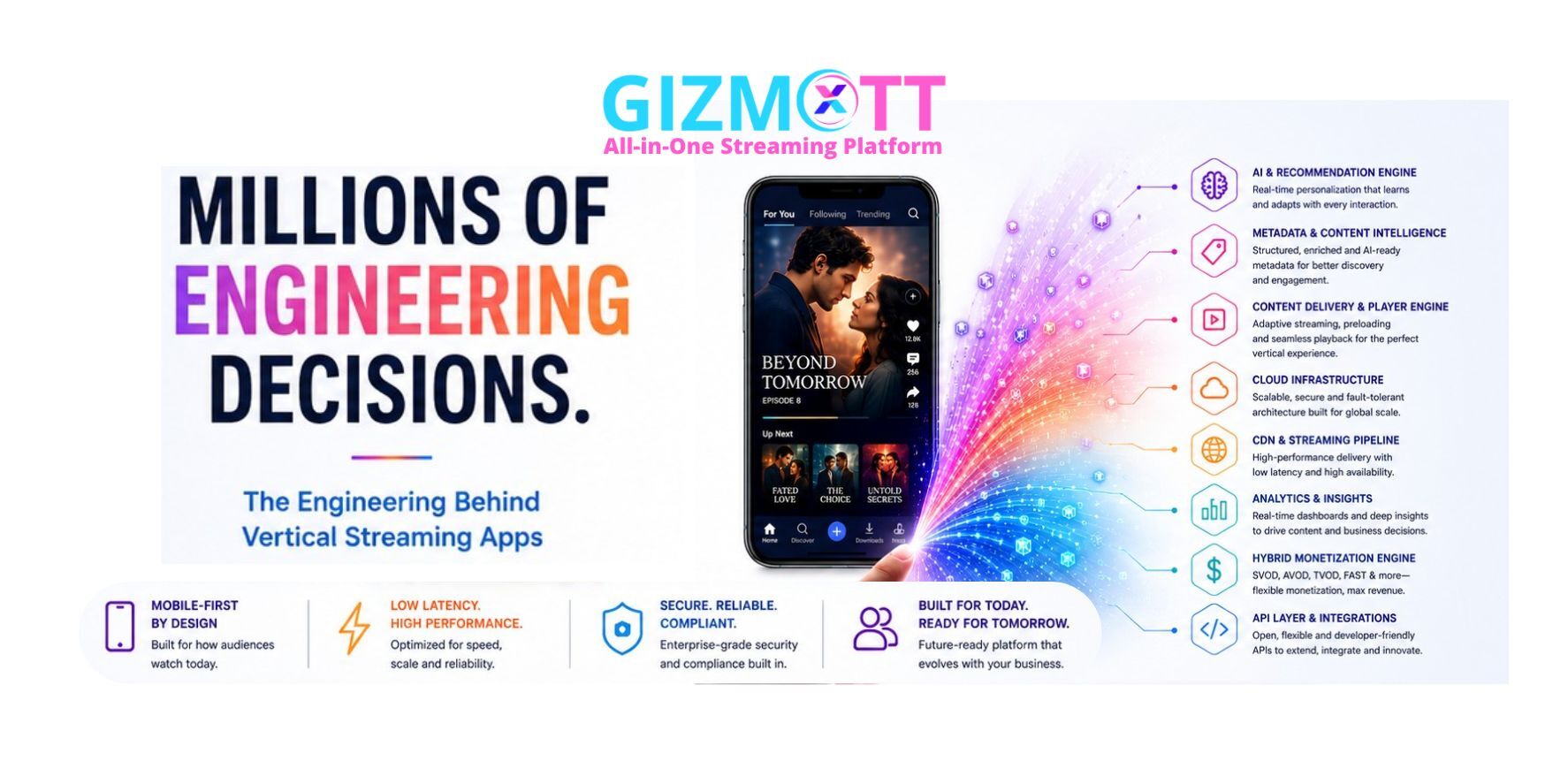

As microdramas and vertical storytelling reshape the streaming landscape, the real competitive advantage lies beneath the interface – in the engineering architecture that powers discovery, personalization, monetization, and scale.
For much of the last decade, the streaming industry has focused on content as the ultimate differentiator. Platforms competed on exclusive originals, expansive content libraries, and subscriber growth, believing that the biggest catalog would ultimately attract the largest audience. While that strategy defined the first generation of streaming, the emergence of vertical video and microdrama platforms is changing the conversation. Today, the industry is witnessing a new wave of mobile-first entertainment. Vertical storytelling has evolved from user-generated short-form videos into professionally produced episodic content designed specifically for smartphones. What began as a niche viewing format has rapidly become one of the fastest-growing categories in digital entertainment, attracting significant investment from studios, creators, broadcasters, and technology companies alike. As executives evaluate this rapidly expanding market, many discussions continue to revolve around content strategies, production budgets, monetization models, and audience acquisition. These are undoubtedly important considerations, but they overlook a far more fundamental question. What kind of engineering is required to make these platforms successful? The reality is that building a modern vertical streaming platform bears little resemblance to building a traditional OTT service. Behind every seamless swipe, instant episode transition, personalized recommendation, and uninterrupted viewing experience lies an engineering ecosystem specifically designed for mobile-first storytelling. The platforms that will lead the next generation of streaming will not simply produce compelling content—they will build intelligent technology capable of delivering, adapting, and monetizing that content at scale. For CEOs, CTOs, and product leaders, this represents an important strategic shift. Engineering is no longer just an operational function responsible for maintaining infrastructure. It has become one of the primary drivers of customer experience, business scalability, and competitive advantage. The future of vertical streaming will be defined as much by engineering excellence as by creative excellence.Vertical Storytelling Demands a Different Technology Mindset
It is tempting to assume that a successful vertical streaming platform is simply another version of TikTok or a traditional OTT application optimized for mobile devices. In reality, these platforms operate under entirely different expectations. Unlike user-generated social platforms, vertical streaming services deliver professionally produced, episodic content where every second of viewer engagement matters. Audiences are not casually browsing short clips; they are following storylines, returning for new episodes, purchasing premium content, and developing long-term viewing habits. This fundamentally changes how the underlying platform must be engineered. The engineering priorities extend well beyond video playback. They include building systems capable of supporting:- Continuous, interruption-free episode delivery.
- Intelligent content recommendations based on viewing behaviour.
- High-performance mobile experiences across varying network conditions.
- Hybrid monetization strategies that adapt to different audience segments.
- Real-time analytics that inform both editorial and commercial decisions.
Engineering Has Become the Product Experience
Consumers rarely think about engineering when using a streaming application. They notice engaging stories, beautiful interfaces, and personalized recommendations. What they do not see is the sophisticated technology stack working continuously behind the scenes to make those experiences possible. For media executives, this distinction is becoming increasingly important. The competitive advantage of modern streaming platforms is no longer limited to content ownership. It is increasingly defined by how effectively engineering transforms content into exceptional user experiences. Consider what happens when a viewer opens a vertical streaming app. Within moments, the platform identifies user preferences, retrieves relevant content, adjusts video quality to available bandwidth, prepares the next episode before the current one finishes, measures engagement signals, updates recommendation models, and records behavioural analytics for future optimization. None of these processes are visible. Yet together they define the quality of the entire product. This shift has elevated engineering from a supporting capability to a strategic business function. Engineering decisions now influence customer satisfaction, retention, monetization efficiency, and ultimately revenue growth. For technology leaders, the conversation has evolved beyond application development. The focus is increasingly on designing platforms capable of continuously learning, adapting, and improving through intelligent infrastructure. In many respects, engineering has become the product itself.Why AI Begins With Infrastructure, Not Features
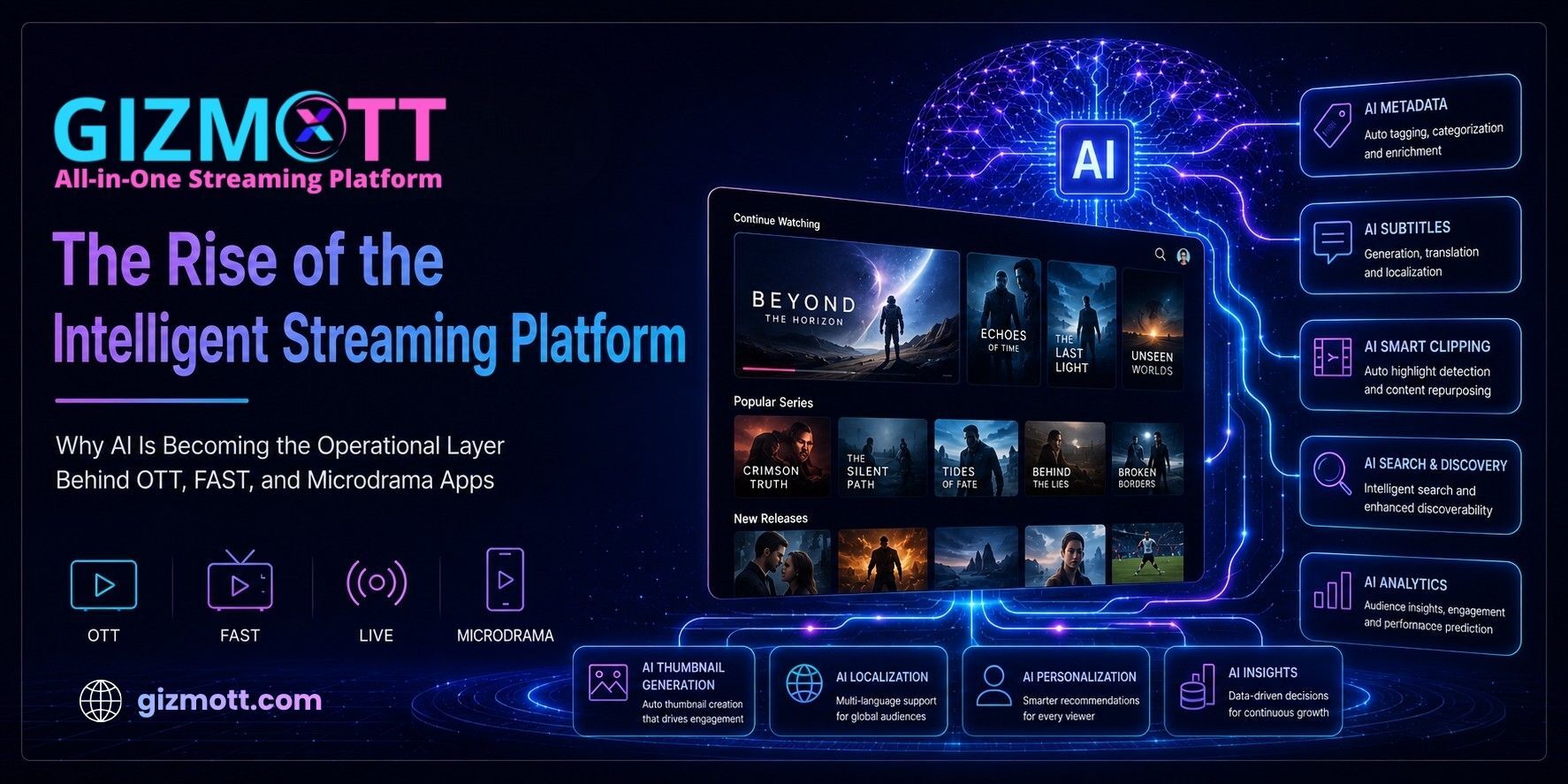
Artificial Intelligence dominates nearly every conversation about the future of media. Recommendation engines, automated content tagging, intelligent search, predictive analytics, and personalized viewing experiences are frequently presented as standalone AI capabilities. In reality, AI is only as effective as the engineering architecture supporting it. Organizations often invest heavily in AI initiatives without first establishing the data infrastructure required for those systems to perform effectively. Poor metadata, disconnected workflows, fragmented content libraries, and inconsistent audience analytics significantly limit the value AI can generate. An AI-powered streaming platform is therefore not defined by the presence of AI features. It is defined by the engineering decisions that make those features possible. This includes building platforms capable of managing structured metadata, integrating machine learning workflows, processing behavioural signals in real time, and continuously refining recommendation models based on audience interactions. For executive teams, this changes how technology investments should be evaluated. Rather than asking whether a platform includes AI capabilities, a more strategic question is whether the platform has been engineered to evolve alongside AI. That distinction is becoming increasingly important as AI transitions from an experimental technology into a fundamental component of digital media infrastructure.Personalization Is an Engineering Challenge
One of the defining characteristics of successful vertical streaming platforms is their ability to make every viewer feel as though the platform understands their preferences. Personalization has become one of the industry’s strongest competitive advantages, yet many organizations continue to view it primarily as a marketing capability. In practice, personalization is an engineering challenge. Delivering individualized viewing experiences requires sophisticated data pipelines capable of processing enormous volumes of behavioural information in real time. Every swipe, pause, completion rate, search query, and viewing session contributes to a continuously evolving understanding of audience preferences. Engineering teams must design systems capable of transforming these signals into meaningful recommendations without compromising performance or scalability. Modern personalization engines increasingly incorporate:- Behavioural analytics.
- AI-powered recommendation models.
- Dynamic content sequencing.
- Predictive viewer retention.
- Intelligent search experiences.
- Context-aware content discovery.