The Creator Economy’s Next Phase: How Influencers Are Becoming Streaming Networks

The Creator Economy’s Next Phase: How Influencers Are Becoming Streaming Networks
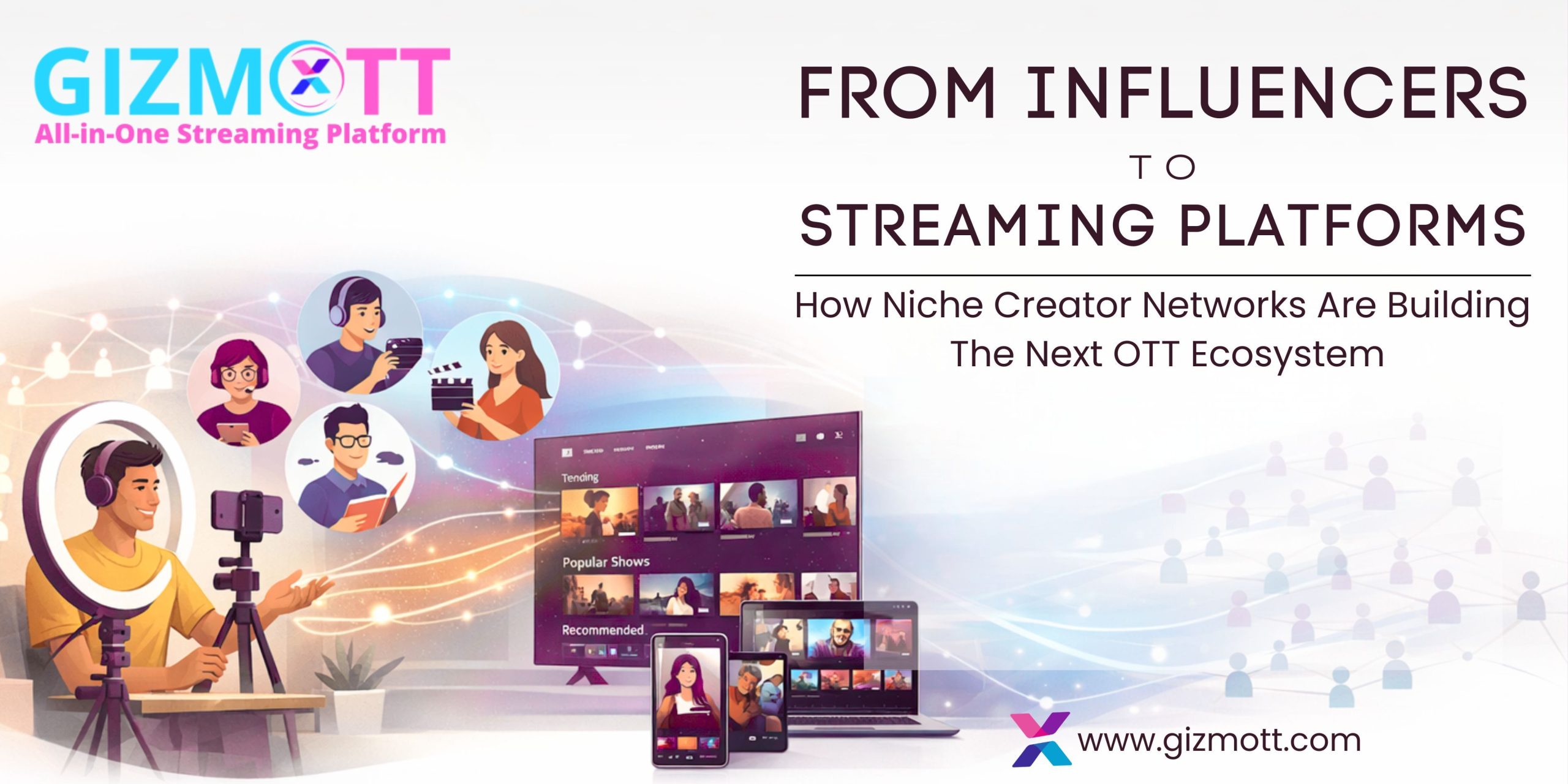
The future of streaming might not belong to platforms trying to reach everyone. It may belong to those that serve someone extremely well. Across the creator economy, niche communities built around storytelling, gaming, education, animation, fitness, and countless other interests are becoming powerful media ecosystems. Increasingly, these communities are no longer content with relying solely on social platforms. Many are beginning to evolve into their own streaming platforms. This shift marks an important development in the digital media landscape. Over the past decade, social media platforms have enabled creators to reach global audiences at unprecedented scale. Yet as the creator economy matures, the limitations of platform-dependent distribution have become more visible. Algorithms determine visibility, monetization models remain unpredictable, and creators rarely own the audience relationships they build. In response, a growing number of creators and niche content networks are exploring a new path: transforming their communities into dedicated streaming ecosystems. What was once the domain of broadcasters and large studios is increasingly becoming accessible to independent creators, niche networks, and digital media entrepreneurs.  

The Rise of Niche Media Networks

Large streaming platforms have traditionally pursued scale. Companies such as Netflix, Amazon Prime Video, and Disney+ compete to attract global audiences through extensive content libraries and high-budget productions. Their success has shaped much of the modern streaming economy. However, the rise of the creator economy has introduced a different model of audience building one based on deep engagement rather than mass reach. Many creators operate within clearly defined niches:
  • independent storytellers producing serialized drama 
  • animation and indie film communities 
  • gaming creators with loyal fan bases 
  • educational creators building dedicated learning audiences 
  • lifestyle, fitness, or cultural content creators 
These communities often exhibit stronger engagement than broader mainstream audiences. Followers do not simply watch content; they participate in communities, discussions, and shared cultural spaces around the creator. In this environment, niche audiences become the foundation for something larger: a creator-led media network.  

From Creator to Platform: A New Pipeline

The transformation from individual creator to streaming platform rarely happens overnight. Instead, it follows a gradual evolution that can be described as the creator-to-platform pipeline.

Stage 1: The Creator

At the earliest stage, creators build audiences on platforms such as YouTube, TikTok, Instagram, or other social media channels. These platforms offer powerful distribution but also impose limitations. Content discovery depends on algorithms, monetization depends on platform policies, and creators have limited control over audience relationships. Nevertheless, successful creators can build substantial communities at this stage, often centred around a specific niche or storytelling format.  

Stage 2: The Creator Network

As creators collaborate and grow their audiences, they often begin forming networks. Multiple creators working within similar niches—whether storytelling, gaming, or animation combine their audiences and production capabilities. This stage introduces new opportunities:
  • collaborative content production 
  • cross-promotion between creators 
  • brand partnerships and sponsorships 
  • larger community engagement 
What begins as a group of individual creators slowly evolves into a structured digital media network.  

Stage 3: The Creator-Owned Platform

The next step is more ambitious. Instead of distributing exclusively through social platforms, creator networks begin exploring owned distribution environments. Launching a dedicated streaming platform allows creators to:
  • build direct relationships with their audiences 
  • control content discovery and presentation 
  • develop subscription or advertising monetization models 
  • protect their community from platform algorithm changes 
This stage marks the transition from creator to media entrepreneur. Historically, building such platforms required significant technical infrastructure and financial resources. Today, however, advances in OTT technology have made it possible for smaller networks and niche communities to launch streaming platforms more efficiently.  

Stage 4: The Creator Media Ecosystem

At its most mature stage, a creator-led platform becomes a full digital ecosystem. Content formats expand, monetization models diversify, and communities deepen their engagement. These ecosystems may include:
  • long-form series and episodic storytelling 
  • short-form or vertical video experiences 
  • live streaming events 
  • FAST channels (Free Ad-Supported Streaming Television) 
  • community interaction and fan engagement features 
The result is a creator-owned streaming network, where the community, content, and platform operate within a single environment.  

Why Niche Platforms Are Thriving

The success of niche streaming platforms is rooted in a fundamental shift in audience behaviour. In an era of overwhelming content choice, many viewers are no longer searching for the largest content library. Instead, they seek platforms that understand their specific interests. A streaming service dedicated to a particular community whether animation enthusiasts, independent filmmakers, or storytelling creators can often deliver a more compelling experience than a general entertainment platform. Niche streaming platforms benefit from several structural advantages:
  • higher audience loyalty due to shared community identity 
  • more targeted content discovery within a focused catalogue 
  • stronger creator-audience relationships 
  • greater monetization flexibility through subscriptions, advertising, or events 
In many ways, these platforms resemble digital versions of specialized media channels that once existed in traditional television ecosystems. The difference is that they are now built around creators and communities rather than broadcast networks.  

Technology Enabling Creator-Owned Platforms

While the concept of creator-led streaming networks is compelling, building such platforms requires sophisticated technological infrastructure. Modern OTT platforms must support a range of capabilities including multi-device streaming, scalable content delivery, advanced analytics, and flexible monetization models. This is where specialized OTT technology platforms play an increasingly important role. Platforms such as GIZMOTT, for example, enable creators, media networks, and niche content communities to launch fully branded streaming apps across multiple devices without building complex infrastructure from scratch. Through OTT technology ecosystems, creator networks can deploy streaming platforms across:
  • smart TVs including Android TV, Apple TV, Roku, and Fire TV 
  • mobile platforms such as iOS and Android 
  • web browsers and connected devices 
Beyond simple content distribution, modern OTT platforms support hybrid monetization models that combine subscription video on demand (SVOD), advertising-supported streaming (AVOD), pay-per-view events (TVOD), and FAST channels. This flexibility allows niche platforms to experiment with different revenue strategies while serving their communities more effectively. Additionally, new formats such as short-form and vertical video environments are becoming increasingly important as mobile-first audiences reshape how stories are consumed. In this sense, OTT infrastructure has become the enabling layer behind the creator-to-platform pipeline.  

A New Phase of the Creator Economy

The creator economy is entering a new stage of maturity. In its earliest phase, creators focused primarily on building audiences. In the current phase, they are beginning to build platforms and ecosystems around those audiences. This evolution mirrors earlier transformations in media history. Just as independent filmmakers once built studios and broadcasters launched networks, today’s digital creators are gradually constructing their own distribution environments. The implications for the streaming industry are significant. Instead of a small number of dominant platforms competing for global audiences, the future may consist of thousands of specialized streaming ecosystems serving niche communities. These platforms will not necessarily compete directly with global streaming giants. Instead, they will complement them by offering focused experiences built around specific interests and creator communities.  

The Future of Creator-Led Streaming

As streaming technology continues to evolve, the barriers to launching niche platforms will continue to fall. What once required extensive technical resources can now be achieved through flexible OTT infrastructure designed to support modern digital media ecosystems. For creators and media entrepreneurs, this represents a powerful opportunity. The same communities that once gathered around social platforms can now become the foundation for fully independent streaming networks. The creator-to-platform pipeline is still in its early stages, but its trajectory is becoming increasingly clear. Influencers are no longer just content producers. They are becoming media networks, platform builders, and digital publishers in their own right. And in the process, they may reshape the future of streaming itself, one niche community at a time.
Related Posts
Leave a Reply

Your email address will not be published.Required fields are marked *