
Insights from MIP London 2026
When the GIZMOTT team arrived at MIP London this year, the objective was clear: listen closely to where the industry is heading, understand what content owners are prioritizing, and observe which conversations carry real strategic weight. What quickly became evident, across panels, investor discussions, and spontaneous networking exchanges, was that the industry is entering a new phase of format evolution.One theme surfaced repeatedly — Vertical dramaNot as a novelty. Not as an experiment. But as a structured, commercially viable streaming strategy. Across the event, the tone surrounding vertical storytelling felt different from previous years. It wasn’t framed as “short-form content.” It was discussed as a scalable programming layer within modern OTT ecosystems. That distinction matters.
From Experimental Format to Structured Strategy
Vertical video first gained momentum in social-first environments. It was native to mobile screens and optimized for rapid consumption. For years, traditional media players viewed it as platform-specific rather than format-defining. That perception has shifted. At MIP London 2026, the conversation had matured. Executives were no longer asking whether vertical video performs. The performance data already exists. Instead, they were asking:- How can vertical drama be structured for OTT?
- How should it be monetized?
- How can it scale sustainably?
Audience Behavior Is the Real Driver
The rise of vertical drama is rooted in behavioral economics, not creative whim. Mobile devices have become the primary interface for content discovery and engagement. Viewers consume entertainment during transitional moments — commuting, waiting, multitasking. Attention windows are fragmented. But appetite for storytelling remains strong. Vertical drama aligns with this reality by:- Respecting natural screen orientation • Delivering compressed narrative arcs • Enabling rapid episodic progression • Reducing friction between episodes
The Economics That Make It Scalable
Beyond engagement, vertical drama’s scalability lies in its operational model. Traditional long-form scripted productions demand high upfront capital, extended timelines, and concentrated risk. Vertical drama operates within a different economic framework.Production cycles are shorter. Sets are leaner. Release cadence is accelerated.This structure allows platforms to:
- Test multiple storylines simultaneously
- Iterate quickly based on performance data
- Scale successful narratives without waiting annual cycles
- Contain financial exposure
Monetization in a Hybrid Ecosystem
Another dominant theme at MIP London was monetization hybridity. AVOD, SVOD, TVOD, and FAST are no longer isolated models. They coexist within layered ecosystems. Vertical drama integrates naturally into this environment. Short episodes allow for:- Light-touch ad insertion between chapters
- Micro-transactions for early access or episode unlocks
- Subscription bundling within larger OTT platforms
- Dedicated vertical FAST channel curation
Retention, Habit, and Engagement Loops
One of the more nuanced discussions at MIP London centered on retention mechanics. Long-form episodic series traditionally rely on weekly anticipation. Vertical drama compresses anticipation into minutes. Episodes conclude quickly. The next is immediately accessible. The barrier to continuation is minimal. This accelerates emotional investment and increases session depth. From a product design perspective, vertical drama aligns closely with engagement engineering principles:- Reduced friction
- Frequent reward cycles
- Rapid narrative payoff
- Strong habit reinforcement
Beyond Trend: A Structural Evolution
Perhaps the most telling sign at MIP London was the shift in language. Vertical drama was not discussed as “emerging” or “experimental.” It was discussed as programmable content infrastructure. That signals maturity. The industry is recognizing that vertical storytelling is not competing with long-form OTT. It complements it. It diversifies audience entry points. It expands monetization flexibility. It represents format evolution — not format replacement. Just as OTT disrupted linear broadcasting by aligning with internet distribution, vertical drama aligns with mobile-native consumption. It reflects device dominance and behavioural shifts. Those rarely reverse.Infrastructure Enables Execution
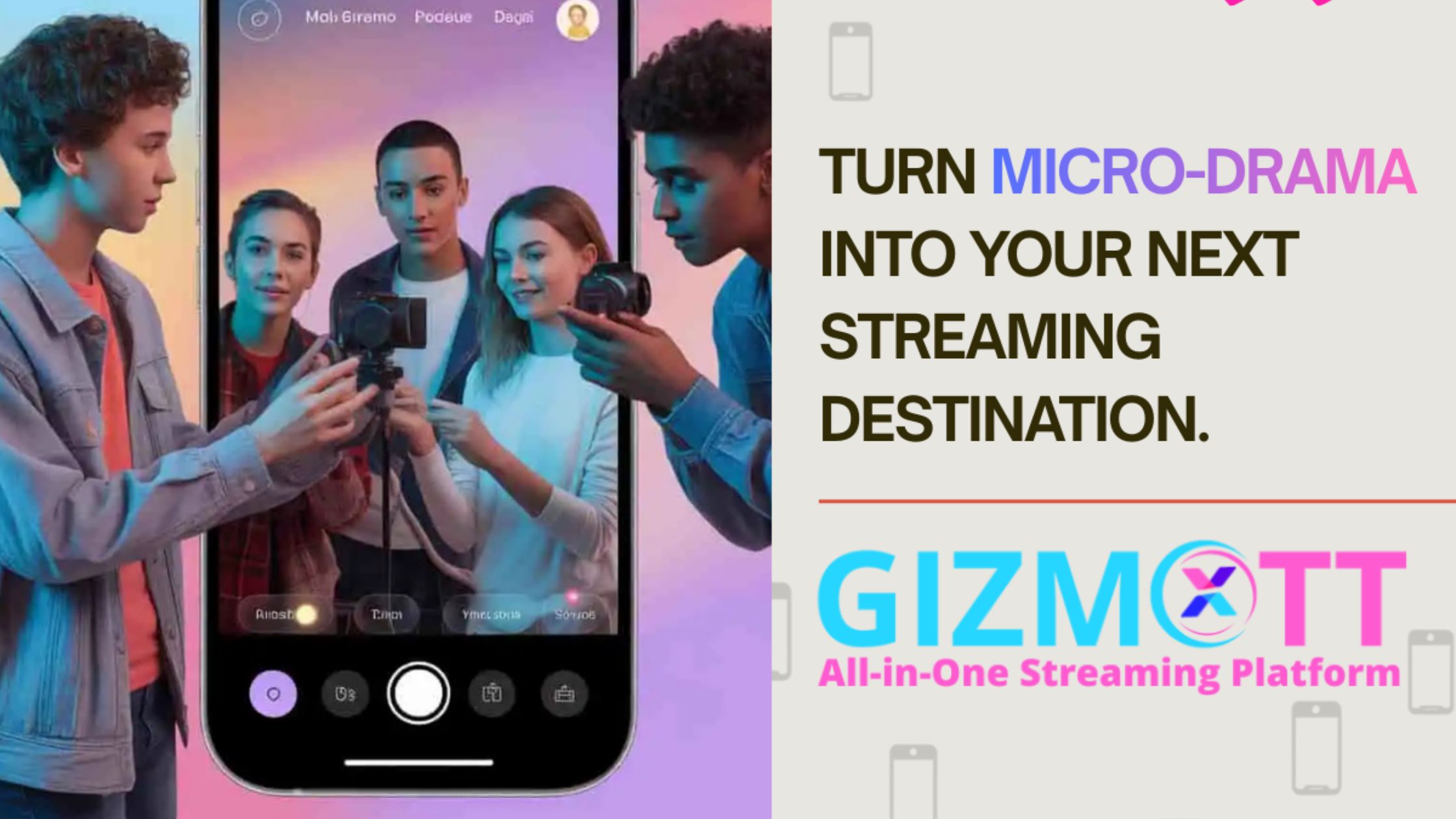
However, the scalability of vertical drama depends on more than creative alignment. It requires platform architecture capable of supporting mobile-native user experiences, seamless episode sequencing, flexible monetization controls, real-time performance analytics, and true cross-device deployment. Without adaptive OTT infrastructure, vertical drama risks remaining fragmented, siloed content rather than an integrated growth strategy. This is where strategic platform design becomes critical. Execution — not just adoption — determines long-term viability. Formats evolve quickly. Platforms must evolve with them. GIZMOTT is built with this adaptability at its core. Through capabilities such as Shorts Central and dedicated Micro Drama App Development, content owners can deploy vertical-native ecosystems that are purpose-built for serialized short-form storytelling. Whether integrated as a vertical content layer within an existing OTT platform or launched as a standalone micro-drama app, the infrastructure is designed to support mobile-first engagement, hybrid monetization, and scalable distribution from day one. The future of streaming will be defined by platforms that can adapt fluidly to multiple formats without structural reinvention. Vertical drama is simply the clearest signal of that evolution — and scalable infrastructure is what turns that signal into opportunity.Looking Ahead
MIP London did not invent vertical drama. But it crystallized its strategic relevance. The industry is no longer debating whether vertical storytelling works. It is refining how to integrate it intelligently within broader streaming ecosystems. The opportunity lies not just in producing vertical content, it lies in building scalable systems around it.The conversations have shifted from “Is this viable?” to “How do we operationalize this at scale?”And that is when a format moves from trend to infrastructure.