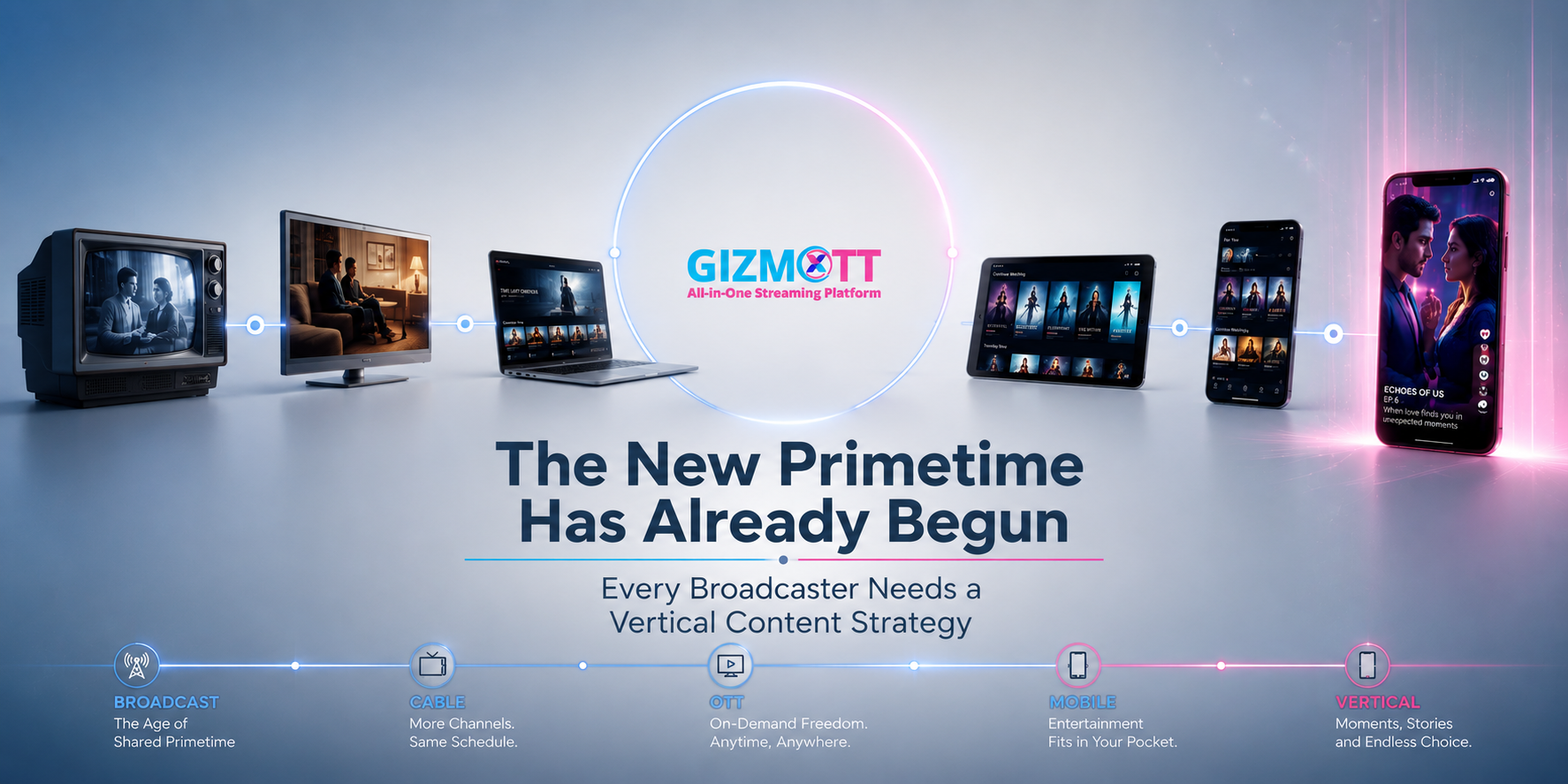

“What should we air at 8 PM?”It was the golden hour of television. Families gathered around a single screen, networks competed for attention, and programming strategies revolved around capturing the largest audience during a fixed window. Entire business models, advertising strategies and production schedules were built around the idea of primetime. Today, that assumption no longer holds. The largest screen in the room is no longer the most important one. In fact, for millions of viewers—particularly younger audiences—it is often the least used. Entertainment has quietly shifted into pockets, commutes, coffee breaks, queues, lunch hours and late-night scrolling sessions. Viewers aren’t waiting for a scheduled broadcast anymore. They’re creating their own primetime, dozens of times a day. Yet, while audience behavior has transformed dramatically, much of the media industry continues to plan content as if appointment viewing still dominates. This disconnect is becoming one of the biggest strategic challenges facing broadcasters, streaming platforms and media companies. The conversation around microdramas, vertical video and short-form storytelling has largely focused on production techniques, monetization models or AI-assisted content creation. Those conversations are important—but they miss a much bigger shift taking place beneath the surface. The real disruption isn’t the format. It’s the programming strategy. Just as linear television once built schedules around audience routines, today’s media companies must begin designing content around mobile behavior. The next generation of successful streaming businesses won’t simply produce vertical content. They’ll develop vertical content strategies that treat smartphones as the primary screen, not a secondary one. This is where the next competitive advantage will emerge.
The Death of Traditional Primetime
For most of television history, primetime was simple. There was a limited number of channels, viewers had relatively fixed routines, and broadcasters competed for a narrow evening window. Success depended on owning a specific time slot and attracting the largest possible audience. Streaming platforms disrupted scheduling by making content available on demand, but they largely retained the same underlying assumption: viewers would dedicate long sessions to entertainment. That assumption is increasingly under pressure. Today’s audiences consume content differently. They don’t always sit down to watch. They open an app while waiting for a coffee, commuting to work, taking a break between meetings or winding down before sleep. Entertainment has become fragmented across the day, creating dozens of high-engagement moments instead of a single viewing window. For creators and broadcasters, this changes everything. Programming can no longer be built around the clock alone. It must be built around behavior.Vertical Video Isn’t a Format – It’s a Programming Model.
This is perhaps the most misunderstood aspect of the vertical media revolution. Many executives still classify vertical video as another content format—alongside documentaries, sports, drama or news. That perspective dramatically underestimates its impact. Vertical content represents an entirely different programming philosophy. Instead of asking: “What show should we release this Friday?” Successful vertical platforms ask:- When is the audience most likely to engage?
- How frequently should episodes be released?
- How quickly can we respond to viewing behavior?
- How do we encourage viewers to return several times a day?
The Three New Primetimes
One of the biggest strategic mistakes media companies make is assuming there’s still only one primetime. There isn’t. Modern audiences create multiple entertainment windows throughout the day.Morning Primetime
- Short bursts of entertainment during commutes or before work.
- Viewers aren’t looking for a 60-minute commitment.
- They’re looking for immediate engagement.
Midday Primetime
- Lunch breaks have become one of the highest mobile consumption periods.
- This is where short episodes thrive.
- A three-minute cliffhanger fits naturally into a twenty-minute break.
Evening Primetime
- Traditional television still matters, but mobile continues after the television is switched off.
- Many viewers finish the day scrolling vertically long after leaving Netflix or YouTube.
The most successful platforms recognize that these aren’t competing viewing sessions. They’re complementary ones.
Creators Already Understand This Better Than Broadcasters
Independent creators didn’t learn audience behavior from research reports. They learned it from algorithms. Every creator who has built an audience on TikTok, Instagram Reels or YouTube Shorts has unconsciously become a programmer. They know:- Which times generate the highest engagement.
- Which formats increase completion rates.
- How frequently audiences expect new content.
- Why consistency matters more than occasional viral success.
Why Microdramas Are Becoming Daily Habits
Much of the industry’s conversation still revolves around storytelling. Storytelling matters. Habit formation matters more. The most successful microdrama platforms aren’t simply publishing episodes. They’re creating routines. Consider what drives audience retention:- Daily episode releases
- Consistent publishing schedules
- Cliffhanger endings
- Push notifications
- Personalized recommendations
- Frictionless viewing experiences
CEOs Should Stop Measuring Hours Watched Alone
The rise of vertical content demands a new executive dashboard. Subscriber growth remains important. Watch time still matters. But neither tells the complete story. Leaders launching microdrama platforms, vertical streaming services or mobile-first OTT experiences should increasingly focus on behavioral metrics such as:- Daily return frequency
- Episode completion rate
- Consecutive viewing sessions
- Cost per engaged viewer
- Revenue per active viewer
- Session frequency
- Viewer retention after episode ten
- Notification-driven re-engagement
Programming for Algorithms vs Programming for Humans
Many organizations believe success comes from understanding algorithms. Algorithms certainly influence discovery. But discovery isn’t loyalty. Algorithms can introduce audiences to your content. Programming determines whether they come back tomorrow. Successful vertical strategies therefore balance two objectives: Optimize for discovery – through metadata, thumbnails, SEO, recommendations and social distribution. Optimize for habit – through scheduling, pacing, publishing cadence and predictable audience routines. Companies focusing exclusively on algorithmic visibility often experience impressive spikes followed by rapid decline. Companies that build viewing habits create sustainable businesses.Infrastructure Will Decide the Winners
One topic receives surprisingly little attention. Technology As vertical platforms scale, operational complexity increases rapidly. Hundreds of short episodes require:- Intelligent scheduling
- Metadata management
- Mobile-first content organization
- Personalization
- Analytics
- Recommendation engines
- Hybrid monetization
- Advertising support
- Multi-platform publishing
- Rights management
Five Strategic Questions Every Media CEO Should Be Asking
Before launching a vertical platform or expanding into microdramas, leadership teams should challenge themselves with five questions:- Are we programming around audience routines or internal production schedules?
- Can our platform support daily publishing without operational bottlenecks?
- Which behavioral metrics define success beyond subscriber numbers?
- Are we optimizing for one long viewing session or multiple daily engagements?
- Does our technology stack allow us to adapt quickly as audience behavior evolves?
The New Primetime Has Already Started
Every major shift in media begins quietly.- Cable television didn’t replace broadcast overnight.
- Streaming didn’t immediately replace cable.
- Vertical media won’t replace long-form entertainment either.