
Why the Next Generation of Streaming Winners Will Be Defined by Scalability, Not Speed
The streaming industry has reached an interesting turning point. Not long ago, launching an OTT platform was considered a significant technological achievement. It demanded large development teams, specialized infrastructure, and months of engineering effort. Today, that landscape has changed dramatically. Cloud technologies, AI-powered workflows, and mature OTT platforms have made launching a streaming service faster and more accessible than ever before. Ironically, as launching has become easier, building a sustainable streaming business has become much harder. Every week, new streaming platforms enter the market. Broadcasters are going direct-to-consumer. Sports organizations are launching their own digital platforms. Production houses are becoming streaming brands. Influencers are building subscription communities, and businesses across industries are discovering the value of owning their audience instead of depending entirely on third-party platforms. The opportunity has never been bigger. Competition has never been tougher. The question is no longer, “Can we launch an OTT platform?” The real question is:“Can our platform support the business we’ll become three or five years from now?”That single question is beginning to separate companies that simply launch from companies that lead.
Launch Is a Milestone. Scale Is the Real Challenge.
Every OTT platform looks impressive on launch day. The apps are polished. The content library is organized. Playback is smooth. The marketing campaign generates excitement, and early subscribers begin exploring the platform. For many organizations, this moment feels like the finish line after months of planning and development. In reality, it is only the beginning. The first few thousand users rarely expose weaknesses. The first content library is relatively easy to manage. Customer support requests remain predictable, workflows are straightforward, and reporting is simple. Under these conditions, almost every streaming platform performs well. Growth changes that equation. As audiences expand, so do expectations. Content libraries grow exponentially, monetization strategies evolve, new devices emerge, advertisers demand deeper insights, and viewers expect increasingly personalized experiences. Suddenly, the platform is no longer just delivering video—it is supporting an entire digital media business. A scalable OTT platform isn’t built to survive launch. It is built to thrive through continuous change.The organizations that succeed over the next decade won’t necessarily be those that launch first. They’ll be the ones that continue adapting long after launch.
Success Doesn’t Break Platforms. It Reveals Them.
Most streaming companies dream about explosive growth. A hit original series. Exclusive sports rights. A creator who suddenly goes viral. A successful marketing campaign that doubles subscriptions overnight. These moments define success. They also reveal whether a platform was designed for long-term growth. Imagine a regional sports network that secures exclusive rights to a national tournament. Downloads surge. Subscription revenue climbs. Advertising inventory sells out. Viewer engagement reaches record levels. From the outside, everything looks perfect. Inside the organization, however, a different story begins to unfold. Editorial teams struggle to publish highlights quickly enough. Customer support requests increase dramatically. Advertising operations become more complex as sponsors demand targeted campaigns. Analytics dashboards begin processing significantly larger datasets, delaying business decisions. Product teams are suddenly asked to introduce new features while maintaining platform stability. Nothing has actually failed. The business has simply become more complex. That’s the difference many organizations fail to recognize.Scalability isn’t about handling more viewers. It’s about handling more business.As a streaming company grows, every department grows with it.
- More creators require better onboarding workflows.
- More content demands smarter organization and discovery.
- More advertisers expect sophisticated targeting and reporting.
- More subscribers generate larger volumes of behavioral data.
- More revenue streams introduce new operational complexity.
Every OTT Platform Eventually Becomes an Infrastructure Business
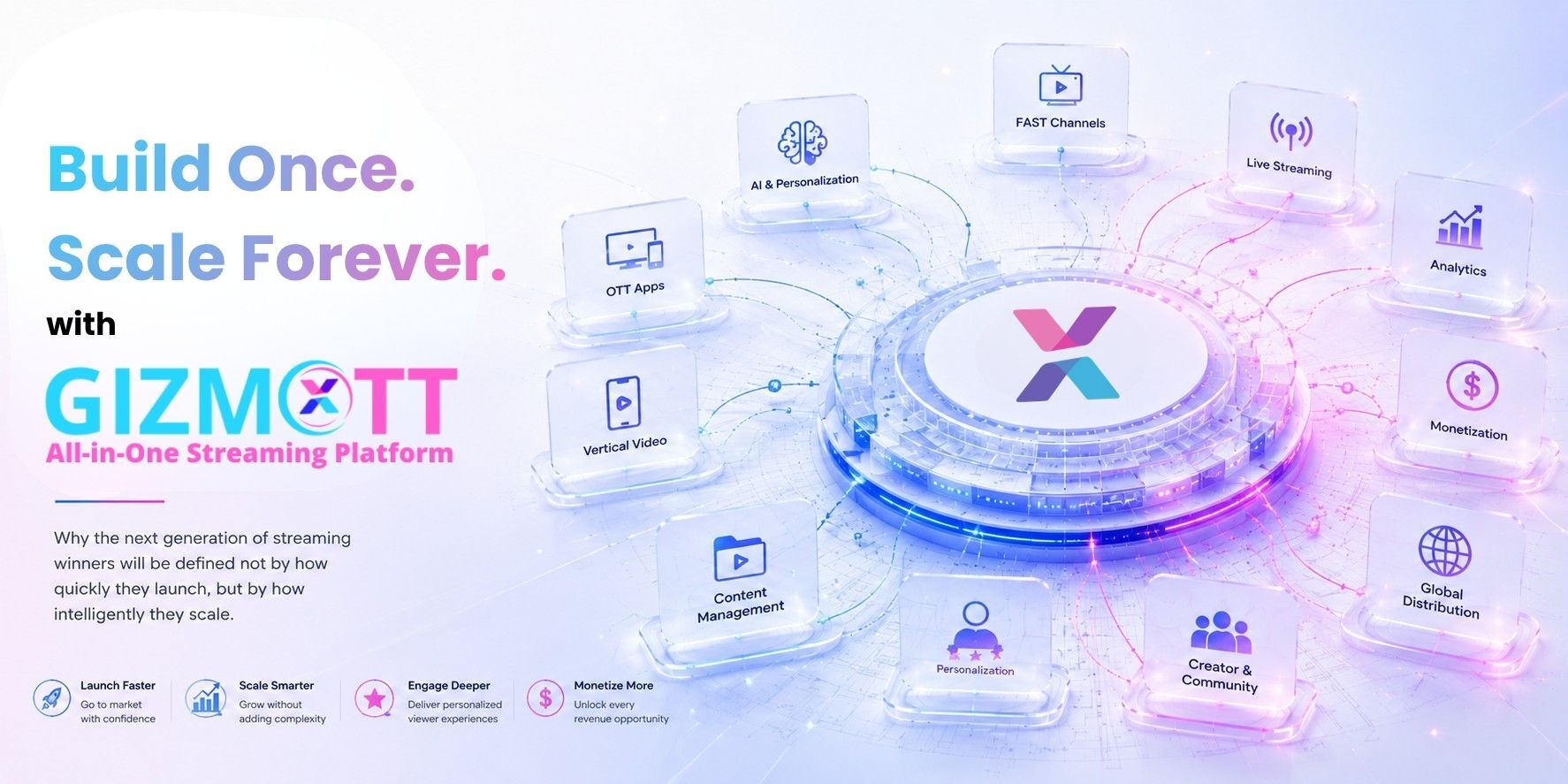
Consumers see Netflix, YouTube, Disney+, Prime Video, or Spotify as entertainment platforms. Their leadership teams see something entirely different. Behind every successful streaming service is an infrastructure capable of supporting continuous innovation. Content may attract audiences, but infrastructure determines how quickly a business can evolve. Every recommendation engine, advertising workflow, payment system, content pipeline, analytics dashboard, AI model, and publishing process becomes part of a much larger operating system. This is where many OTT strategies fall short. Organizations often invest heavily in customer-facing features while overlooking the operational foundation supporting them. New capabilities are added one by one, but the underlying architecture isn’t designed to evolve alongside the business. Eventually, growth begins slowing—not because audiences disappear, but because operations become increasingly difficult to manage. The most successful streaming platforms aren’t necessarily the ones with the most features. They are the ones with the strongest foundation. A modern OTT platform should make it easier—not harder—to introduce new opportunities such as:- FAST Channels
- Live streaming events
- AI-powered personalization
- Vertical video and microdrama
- Hybrid monetization models
- International expansion
- Creator partnerships
The Cost Nobody Plans For: Operational Debt
Technology leaders have long discussed technical debt—the shortcuts taken during development that eventually slow innovation. The streaming industry faces another challenge that’s discussed far less often: operational debt. Operational debt doesn’t appear after a software update. It appears when everyday business activities become increasingly difficult to execute. Launching another FAST channel requires duplicating manual workflows. Adding a new content partner demands hours of configuration. Marketing teams rely on spreadsheets because audience segmentation isn’t automated. Introducing a new monetization model requires engineering resources instead of simple configuration. None of these issues individually seem critical. Collectively, however, they consume time, increase costs, and reduce an organization’s ability to respond to new opportunities. That’s why the conversation around OTT scalability needs to evolve. It’s not just about cloud infrastructure. It’s about creating an operational foundation that allows every department—from editorial and marketing to advertising and product—to grow without unnecessary friction. Because in streaming, growth should increase opportunity. It shouldn’t increase complexity.AI Isn’t Replacing Scalability – It’s Raising the Standard.
Artificial Intelligence has become the most discussed topic in the streaming industry. Every platform now promises AI-powered recommendations, automated metadata generation, personalized user experiences, predictive analytics, and intelligent advertising. These capabilities are impressive, but they have also created a misconception. AI doesn’t solve scalability. It amplifies the need for it. Every AI-driven recommendation relies on processing millions of viewer interactions. Personalized homepages require real-time behavioral analysis. Dynamic advertising depends on faster decision-making, while intelligent search and content discovery demand richer metadata and more sophisticated content organization. In other words, AI introduces another layer of operational complexity. Organizations often view AI as a competitive advantage, but its real value depends on the strength of the platform beneath it. Without scalable architecture, AI simply accelerates existing inefficiencies instead of eliminating them. The question is no longer whether your OTT platform supports AI. The question is whether your platform is prepared for everything AI demands behind the scenes.The OTT Maturity Curve
Every streaming platform follows a similar journey. The difference between industry leaders and everyone else isn’t the starting point—it’s how effectively they evolve through each stage.|
Stage |
Primary Business Focus |
| Launch | Establish a branded streaming presence. |
| Growth | Acquire viewers and expand the content library. |
| Optimization | Improve engagement, retention, and operational efficiency. |
| Expansion | Introduce new monetization models, regions, and partnerships. |
| Ecosystem | Build a flexible platform capable of supporting AI, FAST Channels, creators, live events, and future innovations. |
Streaming Is No Longer One Business
Not long ago, streaming platforms focused on a single objective: delivering on-demand video. Today’s platforms operate in a completely different environment. A single OTT platform may now support subscription video, live events, FAST Channels, advertising, podcasts, creator content, short-form vertical video, digital commerce, and multiple regional experiences—all within the same ecosystem. The platform is no longer supporting one business model. It is supporting several simultaneously. That shift changes the way organizations should think about technology investments. Instead of asking whether a platform supports today’s requirements, leaders should ask whether it can adapt to tomorrow’s opportunities without requiring another complete transformation. The most resilient streaming businesses are built with flexibility at their core. They can evolve as audience behavior evolves.The Next Decade Will Reward Adaptability
The future of streaming won’t be defined by a single innovation. It will be shaped by the speed at which organizations adapt to continuous change. FAST Channels continue to redefine ad-supported television. The creator economy is transforming individuals into media businesses. Vertical video has changed audience expectations, while live commerce, interactive experiences, and AI-driven personalization continue to blur the boundaries between streaming, social media, and digital commerce. Each of these trends introduces new revenue opportunities. Each also increases operational complexity. Successful organizations won’t respond by replacing their technology every few years. They’ll build platforms capable of evolving alongside the industry itself. The companies that lead the next decade won’t necessarily have the largest content libraries or the biggest marketing budgets. They will have the operational agility to experiment faster, launch new services confidently, and adapt without disruption. That is what scalability ultimately delivers.Building for Tomorrow Starts Today
Every generation of technology reaches a point where accessibility stops being a competitive advantage. Launching a website was once revolutionary. Today, every business has one. Launching a mobile app followed the same path. Now, building an OTT platform is undergoing the same transformation. The ability to launch is becoming expected. The ability to scale is becoming exceptional. Organizations that recognize this shift early will spend less time reacting to technology limitations and more time focusing on audience growth, content strategy, partnerships, and innovation. Those that don’t may still launch successfully—but sustaining momentum becomes increasingly difficult as complexity grows. In streaming, success isn’t measured by the day your platform goes live. It’s measured by how confidently your business continues to evolve years later.Final Thoughts
The streaming industry has matured beyond the point where technology alone creates competitive advantage. Today’s viewers expect seamless experiences across devices. Advertisers expect measurable outcomes. Content owners demand faster publishing workflows. Business leaders want flexibility to explore new markets, monetization models, and emerging content formats without rebuilding their entire platform. Meeting those expectations requires more than a feature-rich OTT solution. It requires a platform designed for continuous evolution. At GIZMOTT, this philosophy shapes every product decision we make. We believe the goal isn’t simply to help organizations launch streaming platforms—it’s to help them build scalable digital media businesses that remain adaptable as technology, audiences, and business models continue to evolve. Because launching an OTT platform is a milestone.Building one that scales is the real achievement.